
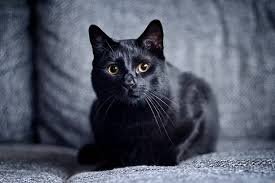
A curious black cat sits quietly wrapped in a soft blue towel, looking straight at the camera.
A small black cat sitting quietly in a blue towel has captured attention with a simple message about wanting companionship. The image presents the cat as if it were asking, “Mummy, why won’t anyone say hi to me?” before adding an even more emotional question: “Why won’t anyone be my friend?”
While the words are written from a playful human perspective rather than being the cat’s literal thoughts, the message reflects something many animal lovers understand. Cats can appear independent, but they can also seek attention, companionship, comfort and a sense of security.
The photograph shows the cat sitting alone on a wet-looking surface, wrapped in a soft blue towel. Its direct expression toward the camera gives the moment an especially expressive quality, making it easy for viewers to imagine a story behind those wide eyes.
The Image That Turns a Quiet Moment Into a Story
There is no complicated scene in the photograph. A black cat is sitting still, wrapped in a blue towel, with a softly blurred background behind it.
Yet the simplicity of the image is what makes it memorable.
The caption gives the cat a fictional voice and turns an ordinary photograph into a small emotional story. Instead of simply showing a cat, it invites viewers to imagine what the animal might be feeling.
The question about having no friends is something people can immediately understand. Friendship and companionship are universal ideas, and using those themes in an animal-focused post can make a simple photograph feel more personal.
The emotional effect comes from the contrast between the cat’s serious expression and the playful wording of the caption.
The cat appears to be staring directly ahead as though waiting for someone to notice it.
That visual connection is enough to encourage viewers to pause and look more closely.
Why Cats Can Seem So Expressive
Cats have a reputation for being independent animals. They often spend significant amounts of time resting, exploring their surroundings or simply observing what is happening around them.
But independence does not mean cats never seek social interaction.
Individual cats have different personalities. Some enjoy spending a great deal of time around people, while others prefer quieter environments. Some actively seek attention, and others show affection in more subtle ways.
A cat’s body language can also communicate a lot.
Its posture, ears, eyes, tail position and movements can provide clues about whether it is relaxed, curious, cautious or interested in what is happening nearby.
In a photograph, however, viewers only see a single moment.
That means it is impossible to know exactly what the cat is thinking simply by looking at its expression.
Still, the human tendency to interpret animal expressions is part of what makes photographs like this so engaging.
The Blue Towel Adds to the Moment
One of the most noticeable details in the photograph is the blue towel surrounding the cat.
The towel gives the image a feeling of comfort and protection. It also creates a strong visual contrast with the cat’s dark fur.
Whether the towel was used to dry the cat, keep it warm or simply provide a comfortable place to sit is not established by the image itself. But visually, it makes the cat appear almost as though it has been wrapped up for extra comfort.
The result is a photograph that feels both humorous and gentle.
The cat’s expression, combined with the towel, makes the animal look as though it is waiting patiently for someone to come over and pay attention.
That is where the caption becomes particularly effective.
“Why Won’t Anyone Be My Friend?”
The second line of the caption gives the image its emotional center.
The question is presented as though the cat is worried that nobody wants to be its friend. It is clearly a playful interpretation rather than evidence of the animal’s actual thoughts.
Still, the idea resonates because companionship is an important part of life for many pets.
Animals can form strong social relationships with people and, depending on their personalities and circumstances, with other animals as well.
For a pet living in a home, regular interaction can include play, feeding, grooming, gentle attention and simply being near familiar people.
A photograph that portrays an animal as wanting friendship taps into that familiar relationship between pets and their human companions.
A Reminder That Every Animal Has Its Own Personality
One of the most important things to remember when looking at animal photographs is that no two pets are exactly alike.
Some cats are outgoing and immediately approach visitors. Others may hide when unfamiliar people enter a room.
Some enjoy being picked up, while others prefer affection without being handled.
Some cats happily share their space with other animals, while others prefer having their own territory.
Because of these differences, it would be inaccurate to assume that a cat appearing alone in one photograph is necessarily lonely.
The image simply captures one moment.
The caption adds a humorous fictional interpretation to that moment.
That distinction matters, especially when sharing animal content online. A compelling image can invite emotion without requiring viewers to assume facts that are not actually known.
Why Animal Photos Connect With So Many People
Animal content has become a major part of online culture because it combines visual appeal with familiar emotions.
A funny dog, a curious kitten or an expressive cat can communicate something without needing a complicated explanation.
People often recognize behaviors from their own pets in these images.
A cat staring at the camera may remind someone of their own pet’s curious expression. A wrapped-up animal may remind another person of a time they cared for a pet after a bath or during cold weather.
These small connections can make an ordinary photograph feel surprisingly personal.
The black cat in this image benefits from that same effect.
Its eyes are directed toward the camera, giving viewers the impression that the animal is looking directly at them.
That makes the fictional question in the caption feel more convincing as a piece of social-media storytelling.
The Difference Between a Caption and Reality
The wording of the image is designed to make people smile or feel sympathy, but it should be understood as creative captioning.
There is no way to determine from the photograph alone whether the cat feels rejected, wants a friend or is wondering why nobody has approached it.
Animals communicate differently from humans, and interpreting their emotions requires looking at behavior and context rather than relying on a single facial expression.
That does not make the caption less entertaining.
In fact, part of the fun of animal content is imagining a humorous personality behind the photograph.
The cat can become a fictional character for a moment: a quiet little animal waiting for somebody to notice it.
That storytelling approach is common in online pet content because it gives viewers an easy way to connect emotionally with an image.
What Responsible Pet Companionship Looks Like
Behind the playful message is also an opportunity to think about the real needs of cats.
Companionship for a pet is not simply about having another animal nearby.
Cats need appropriate food and water, a safe environment, veterinary care, opportunities for mental stimulation and interaction suited to their individual personalities.
For some cats, spending time with their human family may provide plenty of social interaction.
For others, living with another compatible animal can become an important part of their daily environment.
But introducing another pet should never be treated as an automatic solution to perceived loneliness. Animals have different temperaments, and introductions need to be handled carefully.
A cat that appears alone in a photograph does not necessarily need another animal.
Sometimes it simply needs a comfortable place to rest.
And judging from this image, the blue towel certainly appears to provide that.
A Little Humor Goes a Long Way
The strongest part of this photograph may ultimately be its sense of humor.
The cat’s serious expression makes the fictional dialogue even funnier.
The message suggests that the animal is wondering why nobody wants to say hello, while the photograph shows a perfectly composed cat sitting quietly and looking straight at the camera.
That contrast gives the post its personality.
Instead of relying on complicated jokes or dramatic storytelling, the image uses one familiar idea: giving an animal a human-like voice.
The result is easy to understand and easy to share.
Viewers do not need extensive background information to appreciate the joke.
They simply see a cat, read its imagined thoughts and recognize the playful situation.
The Appeal of the “Lonely Pet” Story
Stories about pets appearing lonely often attract attention because they encourage an immediate emotional response.
People naturally want animals to be safe, comfortable and cared for.
However, responsible storytelling should avoid presenting an animal’s emotional state as a confirmed fact when the evidence is only a photograph.
In this case, the caption works best when understood as a humorous fictional voice for the cat.
The real story visible in the image is much simpler: a black cat is sitting wrapped in a blue towel and looking toward the camera.
Everything beyond that is interpretation.
That leaves viewers free to enjoy the emotional message without confusing a playful caption with a verified account of the animal’s feelings.
A Quiet Photograph With a Big Personality
Sometimes the most memorable animal photographs are not the ones showing dramatic action.
A quiet portrait can be just as effective.
This cat is not running, jumping or playing. It is simply sitting still.
But its direct gaze gives the photograph a strong personality.
The blue towel creates a cozy visual detail, while the dark fur makes the cat’s eyes stand out.
Then comes the caption, turning that quiet moment into a conversation.
“Mummy, why won’t anyone say hi to me?” sounds like the opening line of a tiny story.
“Why won’t anyone be my friend?” takes that story one step further.
Suddenly, the cat is no longer just sitting on the ground. In the viewer’s imagination, it is waiting for someone to notice it.
The Takeaway
This image is a good example of how a simple animal photograph can become a memorable piece of online storytelling.
The black cat, blue towel and direct expression provide the visual foundation, while the caption supplies a playful personality.
Although there is no way to know what the cat is actually thinking from the photograph alone, the imagined message about wanting friendship creates an emotional connection with viewers.
It also offers a gentle reminder that animals deserve attention, care and respect, even when we cannot know exactly what they are feeling.
Perhaps the best way to view the photograph is not as proof that the cat is lonely, but as a lighthearted invitation to imagine its personality.
And if the cat really could speak, maybe its first request would be much simpler than the caption suggests:
“Will someone please come say hello?”