
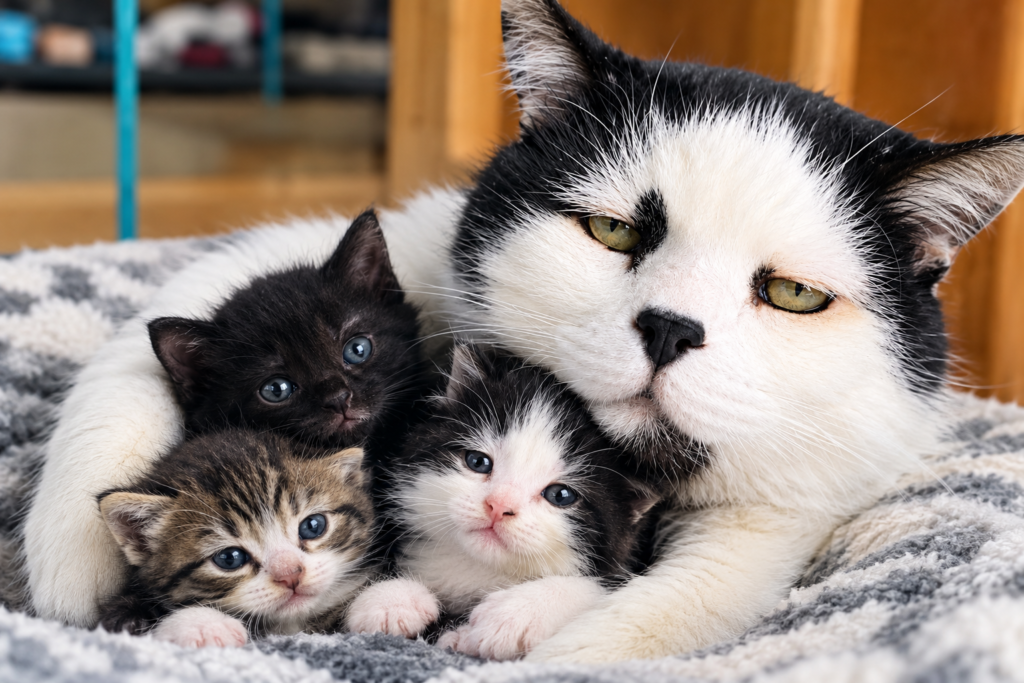
Achille, once rescued while injured and hungry, now offers comfort and companionship to tiny kittens.
Some of the most touching stories in animal rescue begin with a frightened animal that has nowhere safe to turn. A hungry kitten waiting for food, a wounded cat learning to trust again, or a small animal hiding from unfamiliar sounds can remind us how much kindness matters. Sometimes, the animals that have experienced hardship themselves become a source of comfort for others. The story highlighted in this image presents Achille, a rescued cat, as a gentle companion who now hugs frightened kittens at an animal shelter.
The contrast is what makes this story so heartwarming. Achille is described as having once been injured and hungry, needing the care and protection that vulnerable animals depend on humans to provide. Now, he is portrayed as offering affection to kittens that may be struggling with fear and uncertainty. Although the image does not provide the shelter’s name or independently verified details about Achille’s history, its central message is meaningful: an animal that has needed compassion can also become a comforting presence in the lives of others.
Achille’s Journey From a Vulnerable Cat to a Source of Comfort
Life can be especially difficult for cats that are injured, abandoned, or left without reliable access to food and shelter. Unlike animals living in a secure home, vulnerable cats may have to cope with unfamiliar surroundings, changing weather, hunger, and potential dangers. When they become injured or ill, finding safety and receiving appropriate treatment can be essential to their recovery.
Achille’s story begins with this image of vulnerability. The caption describes him as having been rescued while injured and hungry, suggesting that he once needed assistance to overcome difficult circumstances. A rescue can make a life-changing difference for an animal in this situation. Access to food, clean water, veterinary attention, and a protected resting place can help a cat recover physically while beginning to feel secure again.
However, recovery involves more than physical healing. Animals that have experienced frightening or unpredictable situations may need time to become comfortable around people and other animals. Some initially hide, avoid contact, or react cautiously to unfamiliar sounds and movements. Their behavior can change gradually as they experience consistent care and learn that their surroundings are safe.
The image presents Achille as a cat whose role has changed from receiving help to offering companionship. His apparent willingness to cuddle with smaller kittens creates a powerful picture of how animals can form social connections. Rather than focusing only on his difficult beginning, the story draws attention to the comfort he may now provide.
This transformation is an important part of the broader message behind animal rescue. Every rescued animal deserves the opportunity to recover and enjoy a better quality of life. Some may eventually become affectionate companions, while others may remain independent or reserved. Regardless of their personalities, each animal benefits when its individual needs are understood and respected.
Why Frightened Kittens Need Patience and Gentle Care
Kittens entering a shelter can face several unfamiliar experiences at once. They may encounter new smells, strange voices, unfamiliar animals, and a different sleeping environment. If they have been separated from their mother or littermates, they may also lose the familiar companionship that previously helped them feel secure.
For a young kitten, even an ordinary change in surroundings can feel overwhelming. A kitten may respond by hiding in a corner, staying close to a familiar companion, avoiding people, or making repeated vocalizations. These reactions do not necessarily mean that the animal will remain fearful. They can be part of its response to a new and uncertain environment.
Patience is particularly important during this adjustment period. Caregivers can help by providing quiet resting spaces, predictable feeding routines, clean bedding, and opportunities for kittens to explore at their own pace. Gentle interaction can gradually help them become familiar with people without forcing them into situations that make them uncomfortable.
Social contact with suitable feline companions may also provide reassurance. Kittens that have positive experiences with other cats can learn through observation and interaction. A relaxed adult cat may offer an example of calm behavior, although every relationship depends on the personalities, health, and history of the animals involved.
This is where the image of Achille becomes especially appealing. A larger cat resting close to a group of kittens creates the impression of a protective companion. For a frightened kitten, the presence of a calm animal may make an unfamiliar space seem less intimidating.
Still, cats communicate in ways that are different from humans. A cat lying beside another animal may be showing comfort, familiarity, warmth-seeking behavior, or social tolerance. It is not possible to determine every animal’s feelings from a photograph alone. Responsible caregivers observe body language and ensure that interactions remain comfortable for everyone involved.
The essential lesson is simple: frightened kittens need safety, patience, and gentle experiences. Whether that reassurance comes from a trusted human, a familiar littermate, or a compatible adult cat, positive relationships can contribute to a healthier adjustment.
How Rescue Cats Can Develop Strong Bonds With Other Animals
Cats are often described as independent animals, but their social behavior is more complex than that stereotype suggests. Some cats enjoy close relationships with other cats, while others prefer greater personal space. Their willingness to share resting areas, groom one another, or sleep side by side can depend on early experiences, individual temperament, familiarity, and the environment in which they live.
When cats form a comfortable relationship, they may display several friendly behaviors. These can include rubbing their faces against one another, resting in close contact, grooming each other, or choosing to remain in the same area. Such behaviors may help maintain social bonds and create a sense of familiarity.
Physical closeness can also serve practical purposes. Cats may curl up together to conserve warmth, particularly when they feel comfortable sharing a resting place. Kittens, meanwhile, often seek contact with their mother and littermates during early development. Familiar physical contact can be part of their normal social experience.
Achille’s apparent affection toward the kittens reflects this softer side of feline behavior. His story invites readers to consider that a shelter cat can be more than an animal waiting for adoption. With the right temperament and suitable introductions, some cats can become valuable companions to other animals in their care environment.
Nevertheless, not every adult cat will welcome unfamiliar kittens. Some may become stressed by their energy, noise, or unpredictable movements. Shelter staff should therefore introduce animals gradually, provide separate spaces, and monitor their interactions rather than assuming that every cat will naturally become nurturing.
Health is another important consideration. New arrivals should receive appropriate veterinary assessments and follow shelter protocols before sharing close contact with other animals. This helps protect vulnerable kittens from contagious illnesses and allows caregivers to identify any special needs.
When these precautions are followed, compatible cats may enjoy peaceful relationships that benefit their daily lives. Achille’s story offers a hopeful reminder of that possibility while highlighting the importance of responsible animal care.
The Importance of Animal Shelters in Giving Rescued Cats a Second Chance
Animal shelters play an important role in protecting cats that have been abandoned, lost, injured, or left without adequate care. For many animals, a shelter provides an essential bridge between an uncertain situation and a safer future.
The first priority for an injured or undernourished cat is to assess its condition. Depending on its needs, veterinary care may include wound treatment, diagnostic examinations, pain management, nutritional support, or medication. A cat that has gone without food may need a carefully managed feeding plan, especially if it is severely undernourished or medically unwell.
Once immediate needs have been addressed, caregivers can focus on recovery and adjustment. Fresh water, suitable food, clean litter trays, comfortable bedding, and safe places to hide all contribute to an animal’s well-being. Consistent routines also help cats become familiar with their surroundings.
Shelters must balance these individual needs with the practical challenges of caring for multiple animals. Staff members and volunteers often work to monitor health, maintain clean living areas, arrange veterinary visits, and evaluate which animals can safely share space. They may also help potential adopters understand a cat’s personality and care requirements.
For kittens, these efforts can be especially important. Young animals need appropriate nutrition, monitoring, and opportunities for healthy development. Depending on their age and circumstances, some may require bottle-feeding or specialized medical attention. Others may benefit from foster care when they are too young, vulnerable, or stressed to thrive in a busy shelter.
Stories such as Achille’s can help people recognize the value of this work. A rescue is not simply about moving an animal from one location to another. It involves providing ongoing support, responding to changing needs, and helping each animal move toward a safer and more stable life.
Shelter cats also deserve individual consideration. Some are ready for adoption relatively quickly, while others need additional medical treatment or time to adjust. A successful outcome is not always immediate, but consistent care can create opportunities for recovery, companionship, and eventual placement in a suitable home.
Can a Loving Cat Help Another Cat Feel Safe?
A compatible feline companion can sometimes help a nervous cat become more comfortable, but the outcome depends on the animals involved. Cats use scent, posture, movement, and familiar routines to assess their surroundings. When another cat behaves calmly and maintains comfortable boundaries, that interaction may contribute to a more relaxed environment.
For example, a kitten that watches another cat eat, rest, or explore without appearing distressed may gradually become more willing to investigate its surroundings. A familiar companion can also provide social contact during periods of rest. However, these effects are not guaranteed, and a frightened kitten may still need time alone or additional support from a caregiver.
The way cats are introduced matters. Rushing two unfamiliar animals into close contact can create tension and increase the risk of defensive behavior. A gradual introduction allows each cat to become familiar with the other’s scent before direct interaction. Separate food bowls, litter trays, resting areas, and escape routes can reduce competition and help both animals maintain a sense of security.
Caregivers should watch for signs of stress, including persistent hiding, growling, flattened ears, repeated attempts to escape, or aggressive chasing. Friendly interaction should be voluntary. A cat that moves away should be allowed to do so, and a kitten should never be forced to remain in another animal’s embrace.
The photograph associated with Achille’s story captures an appealing image of close companionship. It suggests the possibility that a rescued cat can become a reassuring presence for younger animals. Yet the most effective approach combines affection with careful observation and respect for each animal’s boundaries.
There is also an important distinction between companionship and treatment. A friendly cat may offer social comfort, but it cannot replace veterinary care, appropriate nutrition, or professional behavioral support when these are needed. The strongest rescue environments recognize the value of positive animal relationships while continuing to meet every kitten’s individual needs.
What Achille’s Story Teaches Us About Compassion and Adoption
The emotional appeal of Achille’s story comes from the idea that kindness can continue beyond a single rescue. An animal that once needed protection is portrayed as offering comfort to others facing a difficult beginning. Whether through cuddling, resting nearby, or simply sharing a peaceful space, small acts of companionship can make an uplifting image of life in an animal shelter.
The story also encourages people to look beyond an animal’s appearance or past circumstances. A frightened kitten may grow into a confident companion when its needs are met. An injured cat may recover and develop a strong bond with a caring family. Another animal may require a quieter home and more time to feel comfortable. Each journey is different, and none should be judged by a single moment.
Adoption is one meaningful way to support rescued cats. Potential adopters can begin by considering their living arrangements, available time, financial resources, and experience with pets. They should ask about an animal’s medical history, temperament, feeding routine, and compatibility with children or other pets. These conversations help ensure that the adoption is suitable for both the animal and the household.
People who cannot adopt can still make a difference. Depending on the shelter’s policies, volunteers may assist with cleaning, feeding, socialization, transportation, or adoption events. Donations of approved food, litter, bedding, and veterinary supplies can also help. Some organizations offer foster programs that allow animals to recover in a home environment while they await permanent placement.
Responsible pet ownership is equally important. Cats need regular veterinary care, appropriate nutrition, clean living conditions, enrichment, and protection from avoidable dangers. Spaying and neutering, where appropriate and advised by a veterinarian, can also help prevent unwanted litters and reduce pressure on rescue services.
Most importantly, compassion should include patience. Not every rescued cat will immediately seek affection, and not every kitten will respond to comfort in the same way. Allowing animals to approach at their own pace respects their needs and helps build trust.
Achille’s story, as presented in the image, offers a hopeful message for anyone who cares about animal welfare. It reminds us that rescue can open the door to a better life and that companionship may become part of that journey. When shelters, caregivers, adopters, and volunteers work together, vulnerable cats have a greater chance of finding safety, health, and lasting affection.
A rescued animal does not need to become a hero to deserve love. Every cat deserves care simply because its life matters. If Achille’s gentle image inspires even one person to support a local shelter, consider adopting responsibly, or treat a frightened animal with greater patience, its message has achieved something worthwhile.
Frequently Asked Questions
1. Who is Achille in the animal rescue story?
Achille is presented in the image caption as a rescued cat who was once injured and hungry and is now shown cuddling with frightened kittens at a shelter. The image does not identify the shelter or provide independently verified details about his background.
2. Why do frightened kittens need extra care?
Kittens may feel overwhelmed by unfamiliar sounds, smells, people, and surroundings. Quiet resting spaces, predictable routines, proper nutrition, veterinary care, and gentle handling can help them adjust.
3. Can adult cats comfort frightened kittens?
Some calm, compatible adult cats can provide companionship to kittens. However, not every cat enjoys the company of unfamiliar animals, so introductions should be gradual and supervised.
4. How can people help rescued kittens?
People can support kittens by adopting responsibly, fostering through an established rescue organization, volunteering at shelters, or donating approved supplies. Veterinary care and appropriate nutrition are essential for their well-being.
5. What is the main message of Achille’s story?
The story highlights compassion, recovery, and the possibility of positive relationships between animals. It encourages people to give rescued cats patience, protection, and the opportunity to experience a safer life.