
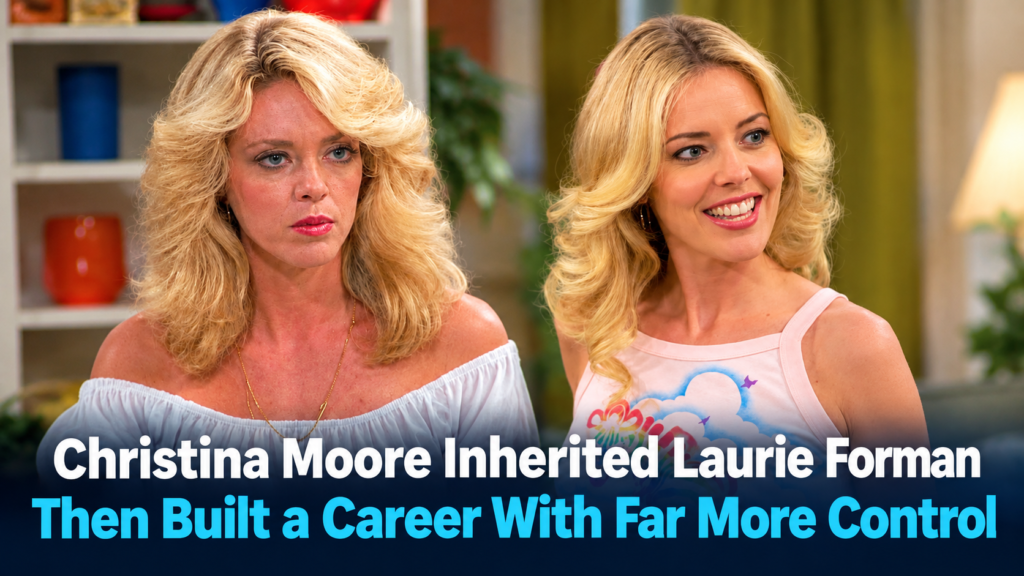
Christina Moore as Laurie Forman and later in her acting career.
Christina Moore’s career is a good example of how a familiar television role can become only one chapter in a much bigger Hollywood story.
For many viewers, Moore remains recognizable as Laurie Forman, the older sister of Eric Forman on That ’70s Show. But the role came with an unusual piece of television history. Moore did not originate the character. She stepped into the part after Lisa Robin Kelly, who had played Laurie during the earlier seasons of the Fox sitcom.
Moore ultimately appeared as Laurie for six episodes during the show’s sixth season in 2003 and 2004. While the role helped connect her with a major television audience, it was only one stop in a career that would eventually expand beyond acting.
Over time, Moore moved into writing and producing, taking on responsibilities that gave her a greater role in shaping the projects she worked on. That transition is what makes the story behind the Threads caption more interesting than a simple “where are they now?” Hollywood update.
Christina Moore’s Laurie Forman Chapter
That ’70s Show became one of the defining sitcoms of its era, following Eric Forman and his friends as they grew up in 1970s Wisconsin.
Laurie Forman was an important supporting character because she was part of the Forman family and provided a different dynamic from Eric and his friends. Lisa Robin Kelly originally played Laurie, appearing on and off during the earlier years of the series.
Christina Moore took over the role in the sixth season.
The transition was a classic example of a television recast. Entertainment Weekly has listed Moore among actors who replaced other performers in established television roles, while Moore herself discussed the circumstances surrounding the Laurie recast in a 2005 TV Guide interview.
For Moore, however, Laurie was not the beginning or the end of her career.
By the time she joined That ’70s Show, she had already been building experience through television appearances and comedy. Her early credits included guest roles on programs such as Friends, Will & Grace and Just Shoot Me! before she became part of the cast of MADtv.
That background helped establish her as a versatile performer rather than an actress associated with only one character.
From Recast Role to a Broader Acting Career
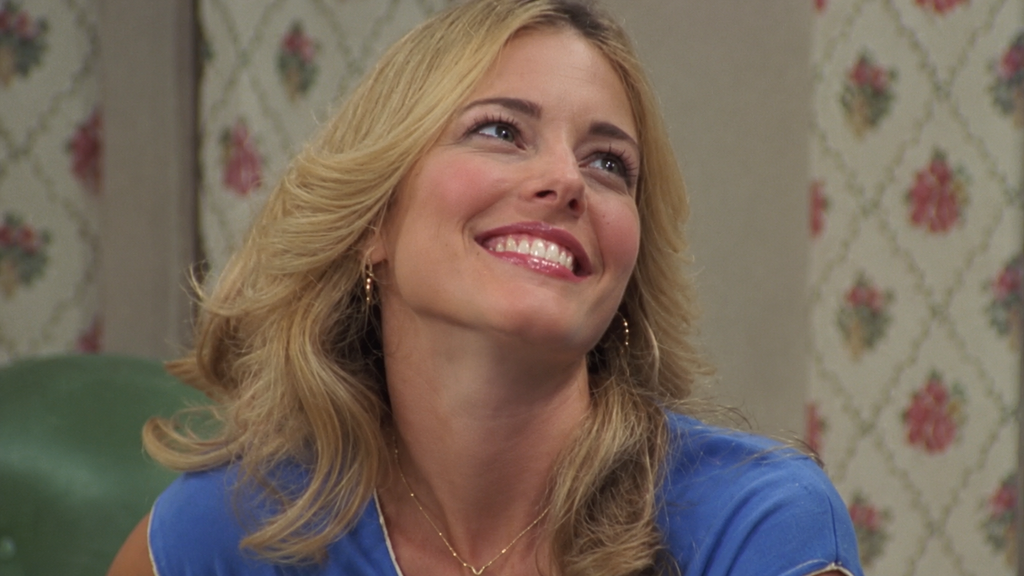
One of the most interesting aspects of Moore’s career is how quickly her résumé expanded beyond Laurie Forman.
After That ’70s Show, she continued working across television and film. Her credits eventually included projects such as Hot Properties, Hawthorne, 90210, Claws, True Blood, Last Man Standing and Jessie.
Her role as Christina Ross on Disney Channel’s Jessie introduced her to another generation of viewers.
That matters because it shows how different parts of Moore’s career reached different audiences.
Someone who remembered her from That ’70s Show could encounter her again years later in a completely different television environment. Instead of remaining tied to the character that first made her familiar to many viewers, Moore continued moving between comedy, television drama, family entertainment and independent film.
Her film work also expanded her range.
She appeared in Without a Paddle, while later projects included films in which she was involved not only as an actress but also as a producer.
That second part would become increasingly important.
The Bigger Change Came When Moore Started Writing
The most significant shift in Christina Moore’s career was not simply getting another acting job.
It was moving into the creative side of filmmaking.
In a 2017 interview about the film Running Wild, Moore discussed how she became involved in writing the screenplay. The project was connected to her interest in horses and was developed as a female-led story.
Moore explained that she worked with screenwriter Brian Lovenet on the screenplay and became deeply involved in the development process.
Her acting background also influenced how she approached writing.
As an actor, she had spent years reading scripts, understanding characters and thinking about how individual performances fit into a larger story. Writing required a different perspective because she was no longer responsible for only one character.
She had to think about the entire story.
That distinction became an important part of her professional evolution.
“Running Wild” Changed the Nature of Her Role
Running Wild, which starred Sharon Stone, represented a major step in Moore’s transition from performer to creator.
Moore was involved as a writer and producer while also appearing in the film.
That combination gave her responsibilities on multiple sides of the production.
In her interview, Moore described how the project evolved from an idea into a screenplay and eventually into production. She also discussed how she became involved in producing after initially entering the project through writing.
Her approach was straightforward: if she was already deeply involved in the material, she wanted to learn what it took to help produce the movie as well.
That meant taking on responsibilities she had not previously handled.
Instead of simply arriving on set to perform, she became involved in decisions surrounding the production itself.
That is where the idea of having “far more control” becomes relevant.
The caption does not mean Moore suddenly controlled every part of Hollywood production. Rather, her career illustrates a gradual shift from being hired primarily as an actor toward becoming someone who could also help develop, write and produce the material.
Acting Taught Her How Stories Work
Moore has also described how her years as an actor influenced her writing.
An actor spends years reading scripts, studying characters and seeing how stories change during production. Those experiences can provide a different understanding of storytelling.
For Moore, that background became useful when she started writing.
She understood how actors think about dialogue and character motivation because she had spent years performing herself. At the same time, writing required her to think beyond a single performance.
That transition can be difficult because an actor may focus primarily on the truth of one character, while a writer has to consider the relationships between numerous characters and the overall direction of the story.
Moore’s experience gave her exposure to both sides.
That became particularly valuable during production, when changes could be made based on the needs of actors, the story and the realities of filmmaking.
Producing Meant Taking Responsibility Beyond the Screen
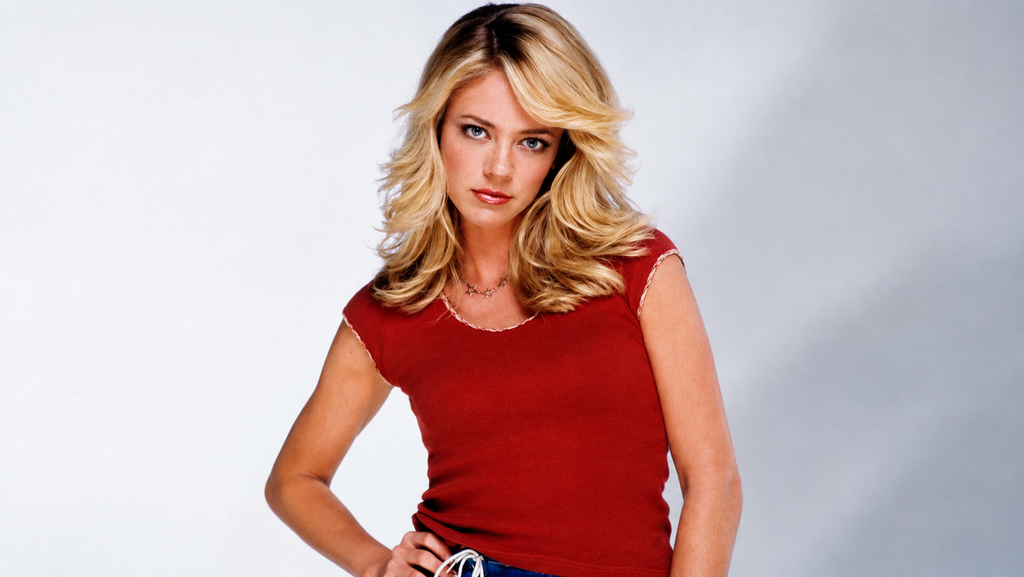
The producer role brought another major change.
An actor’s performance is visible to the audience, but producing involves a much wider collection of responsibilities.
It can involve development, casting, financing, production decisions, scheduling and problem-solving.
Moore’s work in this area expanded considerably over the years.
Her production credits have included projects such as Running Wild, Pray for Rain, American Fighter, Bennett’s War, Lady Driver, Wheels of Fortune, A Hollywood Christmas, That’s Amor, I Believe in Santa and Casa Grande.
Her career therefore became increasingly multi-dimensional.
Instead of defining herself through one television character, Moore developed a professional identity that included actress, writer and producer.
That is a significant change from simply being remembered as the performer who replaced another actress in a sitcom role.
“I Believe in Santa” and the Producer Era
Moore’s later work further demonstrates that producing was not just a short experiment.
She was involved in I Believe in Santa, both acting in and producing the project.
She also worked on projects including A Hollywood Christmas and That’s Amor, while Casa Grande became another example of her involvement on both sides of the camera.
This kind of career development reflects a broader change in Hollywood.
Actors increasingly look for opportunities to develop their own material rather than waiting for studios or producers to decide which roles they should receive.
For Moore, that transition appears to have developed gradually rather than overnight.
She first established herself as a working actor, accumulated years of experience and then used that experience when moving into writing and producing.
Why Laurie Forman Still Matters
Even with everything Moore has done since then, Laurie Forman remains an important part of her public career.
Television audiences often remember actors through one particularly recognizable character.
For Moore, that character was Laurie.
But the interesting part of her story is what happened afterward.
She did not remain limited to the identity created by one sitcom role.
Instead, the role became part of a much larger résumé that eventually included comedy, television drama, family entertainment, independent films, writing and producing.
That makes the original caption especially effective as a career retrospective.
It starts with something audiences already recognize—Laurie Forman—and then shifts attention toward the less familiar story of Moore’s work behind the scenes.
A Career That Expanded Beyond Being Cast
Christina Moore’s Hollywood journey can therefore be viewed as a progression from being cast in stories to becoming increasingly involved in creating those stories.
The difference is subtle but important.
An actor can have a successful career while working entirely within roles created by other people. A writer or producer can participate earlier in the process, helping determine what story gets made and how it reaches the screen.
Moore’s career has included both experiences.
Her time as Laurie Forman gave her another recognizable television credit. Her years as an actress across multiple genres expanded her experience. Her move into writing and producing then gave her additional creative responsibilities.
That is why her career cannot be reduced to a single sitcom recasting.
The Laurie Forman Legacy Is Only One Part of the Story
Christina Moore may still be introduced to some audiences as the actress who played Laurie Forman on That ’70s Show.
But her professional story continued long after those six episodes.
From early television guest appearances to MADtv, from That ’70s Show to Jessie, and from acting into screenwriting and producing, Moore steadily expanded the kind of work she could take on.
The biggest shift was not simply moving from one television show to another.
It was moving from being primarily the person performing a role to also becoming a person involved in developing the material itself.
That makes the story behind the caption more than a nostalgic look at a familiar sitcom actress.
It is a story about career evolution.
Christina Moore stepped into an already established television role, but she did not allow that role to define the limits of her career. Over time, she built a broader professional identity around acting, writing and producing—giving herself more opportunities to participate in the creative process rather than simply waiting for the next part to be offered.
And that may be the most interesting chapter of the Laurie Forman story: the character people remember was only one role, while the career that followed became much bigger.