

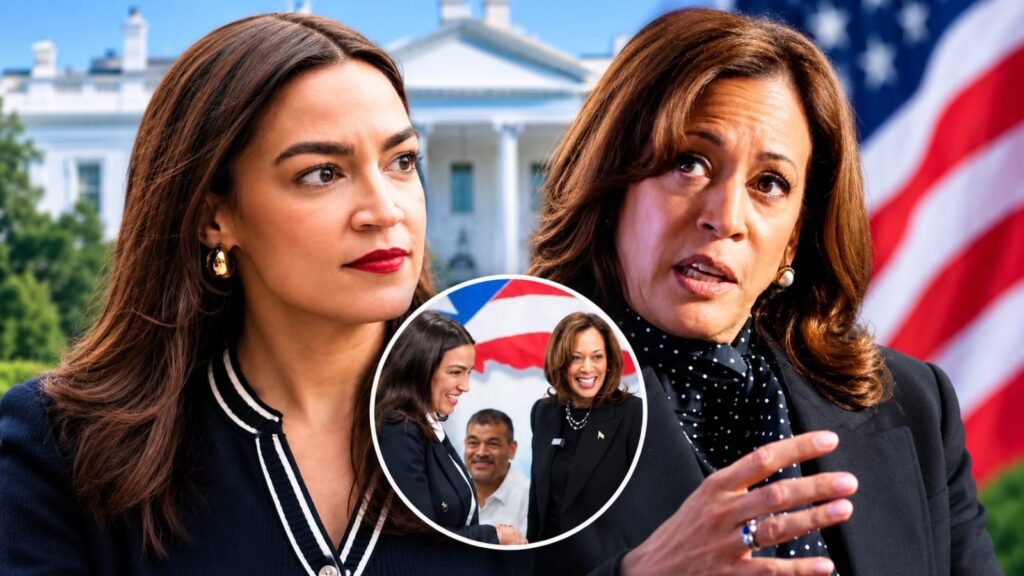
Kamala Harris vs Donald Trump became a major focus of the US political debate over key policy issues.
The 2024 U.S. presidential race between Kamala Harris and Donald Trump was shaped by sharp disagreements over the economy, immigration, abortion, foreign policy and the future of American democracy. A commentary published before Election Day argued strongly in favor of Harris, but the issues it highlighted also illustrate the broader policy differences voters faced during the campaign.
Kamala Harris vs Donald Trump remains an important topic when examining the major political differences between the two figures. Their approaches to the economy, immigration, abortion, foreign policy, health care and the role of government have highlighted significant differences in American political debate.
The election ultimately took place on November 5, 2024. According to the Federal Election Commission’s official results, Trump received 312 electoral votes to Harris’ 226, making Trump the winner of the Electoral College.
Looking back at the campaign, five areas were particularly important in distinguishing the candidates’ platforms and the arguments surrounding them.
1. Their Records in Government
Harris and Trump brought very different political records to the 2024 contest.
Before becoming vice president, Harris served as a U.S. senator from California and previously held statewide office as California’s attorney general. She became vice president in January 2021 and was the first woman, first Black American and first South Asian American to hold the vice presidency.
As part of the Biden administration, Harris supported policies involving economic investment, infrastructure, climate initiatives, reproductive rights and access to health care. Her campaign also emphasized lowering household costs, expanding economic opportunity and supporting families.
Trump, meanwhile, was seeking another term after serving as president from 2017 through 2021. His campaign emphasized immigration enforcement, tax reductions, deregulation, energy production and trade policies designed to encourage domestic manufacturing.
The two records therefore offered voters different governing models: Harris campaigned on continuing and modifying elements of the Democratic administration’s approach, while Trump presented his campaign as a return to and expansion of policies associated with his first presidency.
2. Economic Policy Was a Major Divide
Economic concerns were central to the 2024 election, particularly after Americans experienced a period of high inflation following the pandemic.
Harris proposed a range of measures aimed at reducing household costs and supporting families. Her campaign’s economic program included tax changes affecting corporations and higher-income households, expanded support for families with children, housing initiatives and efforts to reduce prescription-drug costs. Her campaign also proposed restoring and expanding the Child Tax Credit, including a larger credit for families with newborn children.
Trump’s economic agenda included extending and modifying provisions of the 2017 tax law, reducing taxes for corporations and small businesses, increasing military spending and imposing new tariffs on imports. His campaign also proposed eliminating certain taxes, including taxes on tips and overtime pay.
Independent fiscal analysis published during the campaign found that both candidates’ proposals could increase federal debt, although the estimated scale differed depending on assumptions about how their policies would be implemented. The Committee for a Responsible Federal Budget estimated substantially different debt effects under its low-, central- and high-cost scenarios.
That made the economic debate more complicated than simply choosing between tax cuts and tax increases. The candidates differed over taxation, government spending, tariffs, social programs and the role of federal policy in addressing household costs.
3. Immigration and the Southern Border
Immigration was another major dividing line.
Trump’s Republican platform called for increased immigration enforcement, stronger border security and what it described as the “largest deportation program in American history.” The platform also proposed strengthening Immigration and Customs Enforcement, increasing penalties for certain immigration violations and restoring policies associated with Trump’s first administration.
Harris’ campaign also sought to present itself as tougher on border security than some of the Democratic Party’s earlier positions. At the same time, her broader immigration approach differed from Trump’s emphasis on large-scale deportation and expanded enforcement.
The debate reflected a larger disagreement over how the United States should handle unauthorized immigration, asylum claims, border enforcement and legal immigration.
Economic consequences were also part of the discussion. The Committee for a Responsible Federal Budget estimated that Trump’s proposed deportation policies could affect federal deficits by reducing the size of the labor force and taxpaying population, although such estimates depend heavily on assumptions about implementation and economic behavior.
4. Abortion, Health Care and Social Policy
Reproductive rights became one of the defining domestic-policy issues of the 2024 campaign.
Harris made abortion rights a central part of her presidential campaign. Her campaign platform emphasized protecting reproductive freedom following the Supreme Court’s 2022 decision overturning Roe v. Wade.
Trump and the Republican platform took a different approach, emphasizing that abortion policy should largely be determined at the state level while supporting restrictions that Republicans had advocated.
The candidates also differed on health care and social programs. Harris’ campaign proposed measures involving prescription-drug prices, health coverage and support for families. Trump’s platform focused on different approaches to health care, regulation and government spending.
These differences extended beyond abortion into broader questions about the federal government’s role in health care, family support, taxation and social policy.
5. Foreign Policy and Democracy
Foreign policy and democratic institutions were also major themes throughout the campaign.
Harris argued for maintaining strong relationships with U.S. allies and continued support for international partnerships. Her record as vice president included extensive international travel and meetings with foreign leaders. Her official biography says she made 17 foreign trips, visited 21 countries and met with more than 150 world leaders during her vice presidency.
Trump advocated a more “America First” approach, including greater emphasis on burden-sharing among U.S. allies and a different approach to trade and international relations.
The war in Ukraine and America’s relationship with NATO were especially important points of disagreement. Harris supported continued cooperation with U.S. allies, while Trump repeatedly questioned aspects of America’s international commitments and argued for changes to the country’s approach to foreign policy.
Democracy was another major issue because of Trump’s actions and statements surrounding the 2020 election and January 6, 2021.
The 2024 campaign also unfolded while Trump was facing criminal proceedings. In May 2024, a New York jury found him guilty on 34 counts of falsifying business records. The official court record confirms that the verdict was returned on May 30, 2024.
Harris’ supporters argued that Trump’s political record and conduct presented a threat to democratic institutions. Trump and his supporters disputed many of the criticisms directed at him and continued to argue that the criminal cases were politically motivated.
These competing interpretations became part of a broader debate about presidential power, the rule of law and the limits of political authority.
The Election Produced a Different Result Than the Source Predicted
The original commentary behind this article was published on October 31, 2024, just days before Americans voted. It presented Harris as the preferable candidate and urged voters to choose her.
The actual election result provides important retrospective context.
Trump won the Electoral College with 312 votes, while Harris received 226. The official Federal Election Commission results also show that Harris received approximately 75 million votes nationwide, while Trump’s total was higher.
The result demonstrates why campaign commentary and election outcomes should be treated separately. Arguments about which candidate was preferable represented political opinions at the time, while the certified electoral result is an established historical fact.
The 2024 race remains significant because it brought together debates about economic policy, immigration, reproductive rights, foreign affairs and democratic institutions in a single presidential contest.
For readers examining the campaign retrospectively, the most useful approach is to distinguish between documented policies and records on one hand and the political judgments made about those policies on the other.
Ultimately, voters made their decision in November 2024, and the official Electoral College result determined that Trump would return to the presidency.