


A special 96th birthday celebration honoring a legendary Hollywood career.
Clint Eastwood reached another major milestone in 2026 as he celebrated his 96th birthday, giving fans another opportunity to look back at the extraordinary career of one of Hollywood’s most recognizable figures. Across decades in film and television, Eastwood has built a reputation that extends far beyond his work in front of the camera.
From his early Western roles to his celebrated work as a director and filmmaker, Eastwood has remained an important figure in American cinema. His career has crossed generations, with audiences continuing to discover his movies while longtime fans remember the performances that first made him a star.
A Hollywood Career That Spans Generations
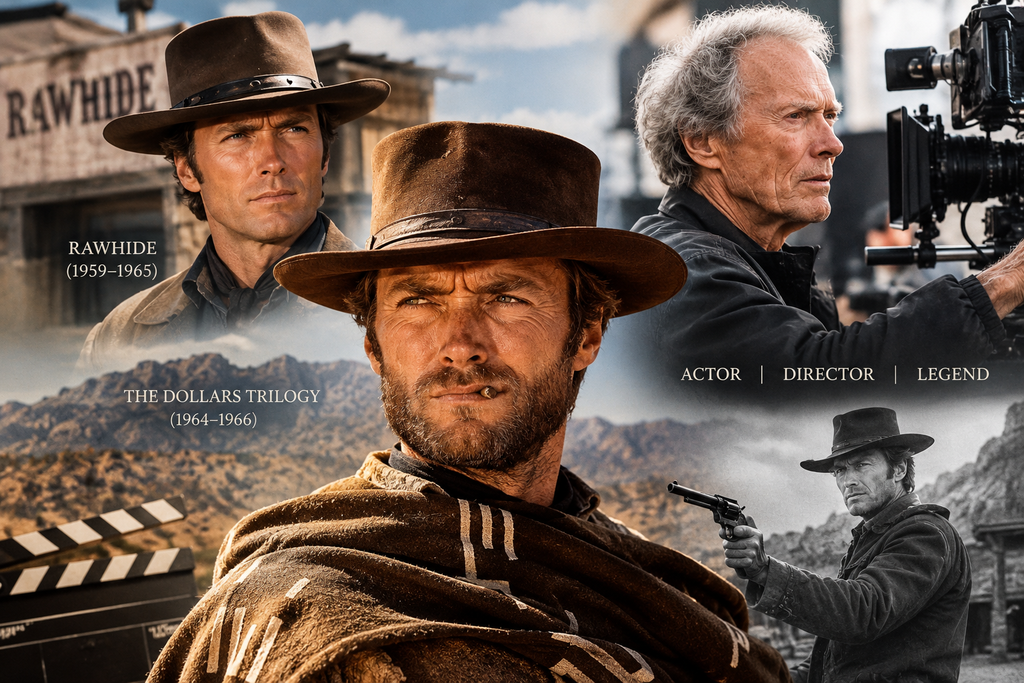
Few actors have maintained such a long connection with popular cinema as Clint Eastwood. His rise to fame began during the television era, when he became widely recognized for his role as Rowdy Yates on the Western series Rawhide.
The series helped introduce Eastwood to a large American television audience and gave him the opportunity to develop the screen presence that would later become one of his defining qualities. His calm delivery, understated expressions and strong physical presence quickly became recognizable.
However, television was only the beginning. Eastwood eventually moved into film and found a role that would dramatically change the direction of his career.
His work in Westerns became particularly important during the 1960s, when he appeared in a series of films directed by Sergio Leone. These movies established him internationally and helped create the image of the quiet, mysterious Western hero that audiences still associate with him.
The Western Roles That Made Him Famous
Eastwood’s international breakthrough came through the famous Western films that included A Fistful of Dollars, For a Few Dollars More and The Good, the Bad and the Ugly.
The films became closely associated with a new style of Western storytelling. Instead of the traditional heroic cowboy image, Eastwood often played characters who were quieter, tougher and more difficult to read.
His performance style was equally distinctive. He rarely needed long speeches to command attention. A look, a pause or a simple line could communicate what another actor might express through an extended scene.
That understated approach became an important part of his identity as a performer. It also helped him transition into other genres as his career developed.
By the end of the 1960s, Eastwood was no longer simply a television actor or Western star. He had become an international movie name with the freedom to pursue different kinds of projects.
From Actor to Acclaimed Filmmaker
One of the most significant parts of Eastwood’s legacy is his transition from acting into directing.
While many performers remain primarily known for their work on screen, Eastwood established himself as a filmmaker capable of creating movies with a distinct style and emotional tone.
His directing career allowed him to explore stories that were different from the Western roles that initially made him famous. He worked across drama, crime, sports, romance and historical subjects, demonstrating a range that sometimes received less attention than his acting career.
Eastwood’s approach to filmmaking has often been associated with efficiency and restraint. Rather than relying heavily on unnecessary spectacle, his movies frequently focus on characters, relationships and the consequences of their decisions.
That filmmaking philosophy helped him remain relevant as Hollywood changed around him.
Dirty Harry Created Another Iconic Character
While Westerns established Eastwood as a major movie star, the Dirty Harry series created another character that became deeply connected to his public image.
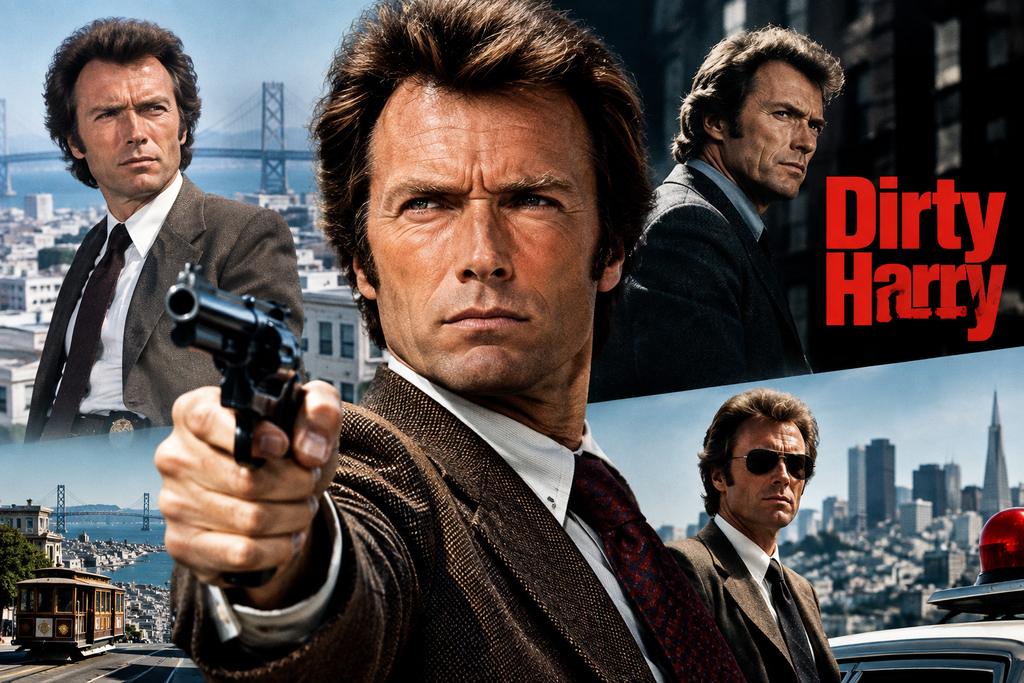
As San Francisco police inspector Harry Callahan, Eastwood portrayed a character known for his tough personality and uncompromising approach to law enforcement. The original Dirty Harry, released in 1971, became a major success and established a new chapter in his career.
The role also demonstrated Eastwood’s ability to build a franchise around a character without losing his recognizable screen persona.
Harry Callahan became one of the most memorable characters of Eastwood’s acting career, although the actor himself continued taking on very different projects throughout the decades that followed.
Eastwood’s Career Behind the Camera
Eastwood’s achievements as a director eventually became just as important as his accomplishments as an actor.
He directed numerous films and developed a reputation for allowing stories and performances to remain at the center of his movies. His work behind the camera earned respect from audiences and the film industry alike.
One of his most celebrated directorial achievements was Unforgiven, a Western released in 1992. Eastwood directed the movie and starred in it, returning to the genre that had played such an important role in his early career.
Rather than presenting the traditional Western hero story, Unforgiven examined violence, regret and the consequences of a violent past. The film became one of the most respected Westerns of its era and earned major awards recognition.
The success demonstrated that Eastwood was capable of revisiting familiar territory while presenting it from a more mature perspective.
Million Dollar Baby Added Another Major Chapter
Eastwood continued to demonstrate his abilities as a director well into the 21st century.
His 2004 film Million Dollar Baby became another major milestone. The drama centered on the relationship between a veteran boxing trainer and an aspiring female boxer, bringing together themes of ambition, trust, family and difficult personal choices.
Eastwood directed the film and also appeared in it alongside Hilary Swank and Morgan Freeman.
The movie received widespread critical recognition and became one of the most important films of his later career. Its success further established Eastwood as a filmmaker whose work could attract both mainstream audiences and serious critical attention.
A Career Built on Reinvention
What makes Eastwood’s career unusual is not simply its length. It is the number of times he successfully reinvented himself.
He began as a television actor, became an international Western star, established himself as an action-film icon and eventually built a respected career as a director.
Each stage added another layer to his reputation.
For many performers, remaining successful for several decades is already a major achievement. Eastwood’s career has lasted much longer while allowing him to take on different creative roles.
His longevity has also meant that several generations have developed their own connection to his work. Older audiences may remember his Westerns, while younger viewers may know him primarily through his directing career or later films.
Why Clint Eastwood Remains an Icon
Part of Eastwood’s appeal comes from the consistency of his screen personality. Even when playing very different characters, he often carries an unmistakable sense of confidence and restraint.
His performances are rarely built around excessive emotion. Instead, he often allows small gestures and quiet moments to communicate a character’s personality.
That style became especially influential during the years when action heroes were often expected to be loud and physically dominant. Eastwood’s approach showed that a performer could create a powerful presence without constantly demanding attention.
His influence also extends beyond acting. As a director, he demonstrated that an actor could successfully move behind the camera and build a second career based on storytelling and filmmaking.
A Legacy That Continues Beyond One Era
Eastwood’s legacy is difficult to define through a single movie or character because his career contains so many different chapters.
The Westerns of the 1960s remain important to his early success. Dirty Harry represents another defining period. Later films such as Unforgiven and Million Dollar Baby highlight his work as a filmmaker.
Together, these projects form a career that has remained visible across changing generations of Hollywood.
His influence can also be seen in the continued popularity of classic films. Movies from earlier decades remain available to new audiences, allowing viewers who were not alive when Eastwood first became famous to discover his work.
That ability to remain culturally recognizable decades after his breakthrough is one of the clearest signs of his impact.
Celebrating Clint Eastwood at 96
Eastwood’s 96th birthday offers fans a natural moment to reflect on the extraordinary length of his career.
His journey from a young television performer to an internationally recognized actor and acclaimed director represents one of the more remarkable stories in Hollywood history.
At 96, his name remains strongly connected to American cinema. His movies continue to be discussed, watched and remembered, while his career provides an example of how an entertainer can evolve rather than remain tied to one particular period.
The birthday milestone is therefore about more than age. It is an opportunity to recognize decades of performances, films and creative work that helped shape the image of the modern Hollywood star.
A Timeless Hollywood Presence
Clint Eastwood’s career demonstrates why some entertainers become more than celebrities. They become part of the history of popular culture.
From the dusty landscapes of classic Westerns to the director’s chair, Eastwood has spent decades creating work that audiences continue to remember.
His quiet screen presence, memorable characters and long career have made him one of the defining figures of American film.
As fans celebrate Clint Eastwood at 96, his legacy remains firmly connected to the movies that shaped generations. His career may have changed direction many times, but the impact of his work continues to give audiences reasons to revisit his films and appreciate his contribution to Hollywood.