

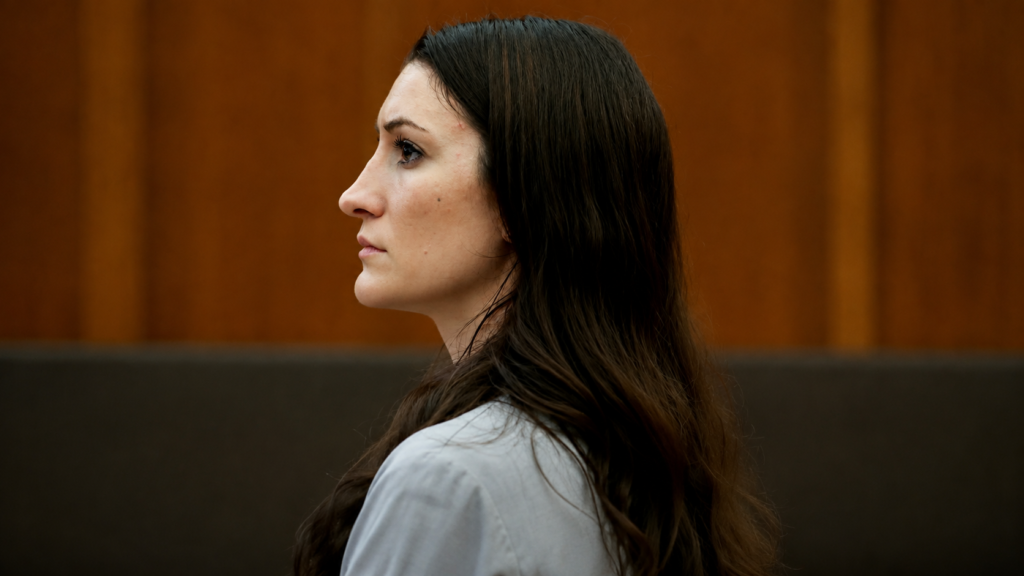
Lindsay Clancy’s defense team raised concerns about a juror during deliberations in her ongoing murder trial.
The murder trial of Lindsay Clancy reached a tense moment in Massachusetts when her defense attorney requested that a juror be removed, claiming the juror was refusing to follow instructions given by the judge.
Attorney Kevin Reddington made the request after a lengthy sidebar discussion involving Judge William Sullivan and the jury. According to Reddington, a note from the jury foreperson suggested that one juror was unwilling to follow the legal instructions provided by the court, potentially preventing the panel from reaching a unanimous decision.
The judge ultimately declined to replace the juror and instead sent the jury back to continue deliberations.
Clancy is facing charges related to the deaths of her three children in January 2023. Her defense team argues that she was experiencing a severe mental health crisis at the time, while prosecutors maintain that the killings were intentional.
Defense Attorney Claims Juror Was Not Following Court Instructions
The courtroom dispute occurred during the final stages of jury deliberations.
After Judge Sullivan questioned jurors individually following concerns about the deliberation process, Reddington addressed the court without the jury present.
The defense attorney said that information from the jury foreperson indicated that one juror was not accepting the law as explained by the judge.
Reddington argued that the situation could prevent the jury from reaching a verdict and asked the court to replace the juror.
He expressed concern that the trial could end in a mistrial because of what he described as a juror’s refusal to follow legal instructions.
However, Judge Sullivan did not remove any juror and instead reminded the jury about the legal standards they were required to consider.
The jurors were later sent home for the evening and were scheduled to return to continue discussions.
Judge Reviews Legal Instructions With Jury
Before the defense raised concerns about the juror, Judge Sullivan reviewed important legal instructions with the panel.
The judge specifically addressed concepts involving the law and reasonable doubt, which are central issues in criminal trials.
Jurors in criminal cases are required to evaluate evidence based on the legal standards provided by the court rather than personal opinions or outside beliefs.
The disagreement highlighted the challenges that can occur during lengthy and emotionally difficult trials, especially when jurors must reach a unanimous decision.
Lindsay Clancy Faces Charges in Deaths of Three Children
Lindsay Clancy is charged with first-degree murder in connection with the deaths of her three children: Cora, 5; Dawson, 3; and Callan, 8 months old.
The children died at their family home in Duxbury, Massachusetts, in January 2023.
Authorities said Clancy strangled the children using exercise bands before attempting to take her own life by jumping from a second-story window.
Clancy has pleaded not guilty by reason of lack of criminal responsibility.
Her defense team does not dispute that she caused the children’s deaths but argues that her mental state at the time should be considered when determining criminal responsibility.
Defense Argues Mental Health Crisis Played a Role
Throughout the trial, Reddington has argued that Clancy was experiencing a severe psychiatric condition when the deaths occurred.
The defense claimed that she suffered from postpartum mental health struggles, psychosis, and issues related to medication.
According to the defense argument, Clancy’s ability to understand her actions and their consequences was affected by her mental state.
Reddington also argued during closing statements that medical providers failed to properly address Clancy’s mental health concerns before the tragedy.
The defense has maintained that the case is not about denying what happened but about understanding the circumstances surrounding the deaths.
Prosecutors Argue the Killings Were Intentional
Prosecutors have presented a different explanation of events.
Assistant District Attorney Jennifer Sprague argued that Clancy was experiencing depression and suicidal thoughts but was not suffering from psychosis when she killed her children.
During closing arguments, prosecutors told jurors that the children were an important part of Clancy’s life and argued that she intentionally removed what they described as a protective factor.
The prosecution has argued that the evidence supports a finding that Clancy understood her actions and should be held legally responsible.
Jury Allowed to Consider Lesser Charges
Although Clancy faces first-degree murder charges, jurors were also instructed that they could consider other possible outcomes.
The panel was allowed to evaluate lesser charges, including second-degree murder and manslaughter.
The final decision depends on how jurors interpret the evidence presented during the weeks-long trial.
The jury has heard testimony from numerous witnesses, including police officers, medical professionals, and people close to Clancy.
Trial Included Testimony From Medical Experts and Family Members
The case has attracted significant attention because of the complex questions surrounding mental health, motherhood, and criminal responsibility.
During the trial, witnesses included law enforcement officials who investigated the deaths, medical providers who treated Clancy, and her former husband, Patrick.
Medical testimony has been a major part of the proceedings as both sides presented different views of Clancy’s mental condition.
The defense focused heavily on psychiatric concerns, while prosecutors challenged the argument that Clancy was unable to understand her actions.
Emotional Debate Over Mental Health and Criminal Responsibility
The trial has raised broader discussions about how courts handle cases involving severe mental illness.
Cases involving claims of psychiatric impairment often require juries to carefully examine medical evidence, expert opinions, and the defendant’s actions before and after the alleged crime.
The legal question is not simply whether someone experienced mental health struggles but whether those struggles affected their ability to understand or control their actions under the law.
That distinction has been central to both the defense and prosecution arguments.
Deliberations Continue as Jury Considers Verdict
The jury’s decision remains pending following the courtroom dispute over the juror.
Judge Sullivan’s decision to keep the original jury panel intact means deliberations will continue with all jurors participating.
The outcome of the case will depend on whether prosecutors have proven the charges beyond a reasonable doubt or whether the defense arguments about Clancy’s mental state persuade the jury.
As deliberations continue, the case remains one of Massachusetts’ most closely watched criminal trials.