
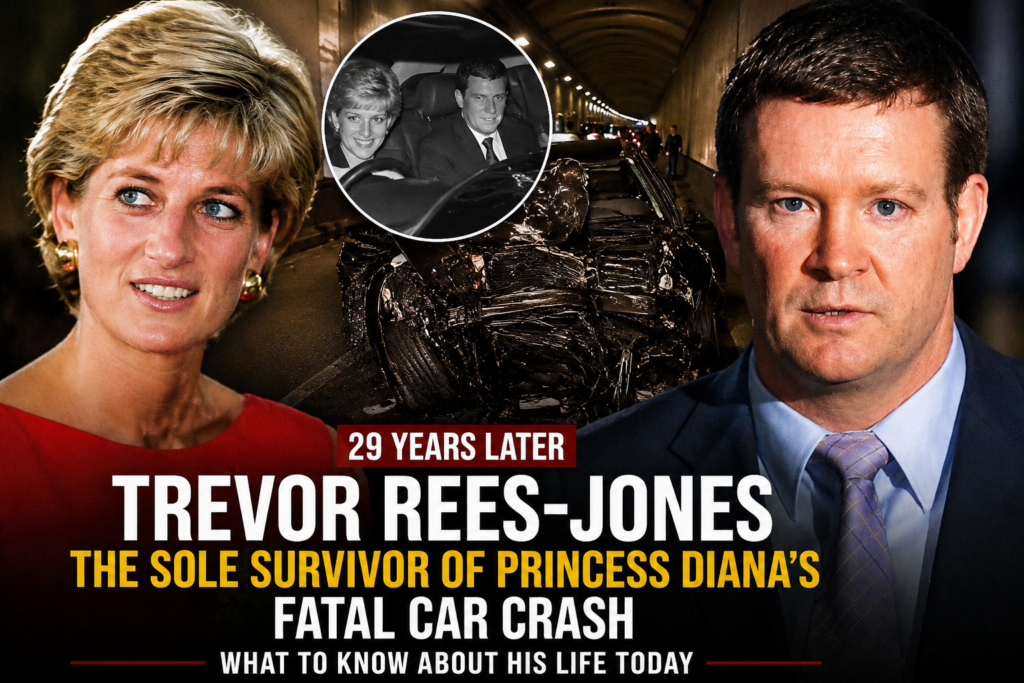
Trevor Rees-Jones was the sole survivor of the 1997 Paris car crash that killed Princess Diana, Dodi Fayed and driver Henri Paul.
Nearly three decades after the Paris car crash that killed Princess Diana, Dodi Fayed and driver Henri Paul, Trevor Rees-Jones remains the only person who survived the vehicle’s fatal collision. The former bodyguard suffered devastating injuries that required extensive surgery, while the tragedy permanently changed the course of his life.
Rees-Jones was working for the Fayed family rather than directly for Diana when he accompanied the princess and Dodi on the night of Aug. 30, 1997. After the crash, he faced a long physical recovery and became the subject of conspiracy theories surrounding the deaths. He later documented his experience in his 2000 memoir, The Bodyguard’s Story.
Who Is Trevor Rees-Jones?
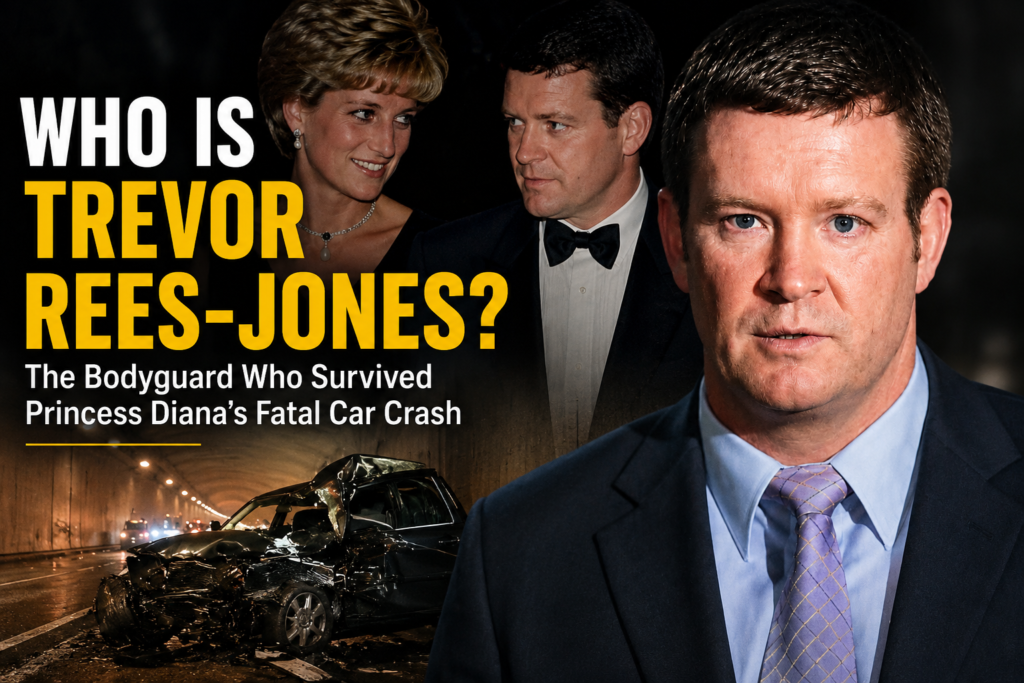
Born in 1968, Trevor Rees-Jones grew up in Oswestry, England, near the Welsh border. Before entering private security, he studied sport and biological science and served with the British Army Special Forces as a member of the 1st Battalion, Parachute Regiment.
His military career included service in Northern Ireland, where he received a General Service Medal. After leaving the army, he moved into private security and eventually joined the security team working for the Fayed family.
In the mid-1990s, Rees-Jones became part of the family’s private security operation. He married Sue Jones in 1995 and combined her surname with his own, becoming known as Trevor Rees-Jones.
Was Trevor Rees-Jones Princess Diana’s Personal Bodyguard?
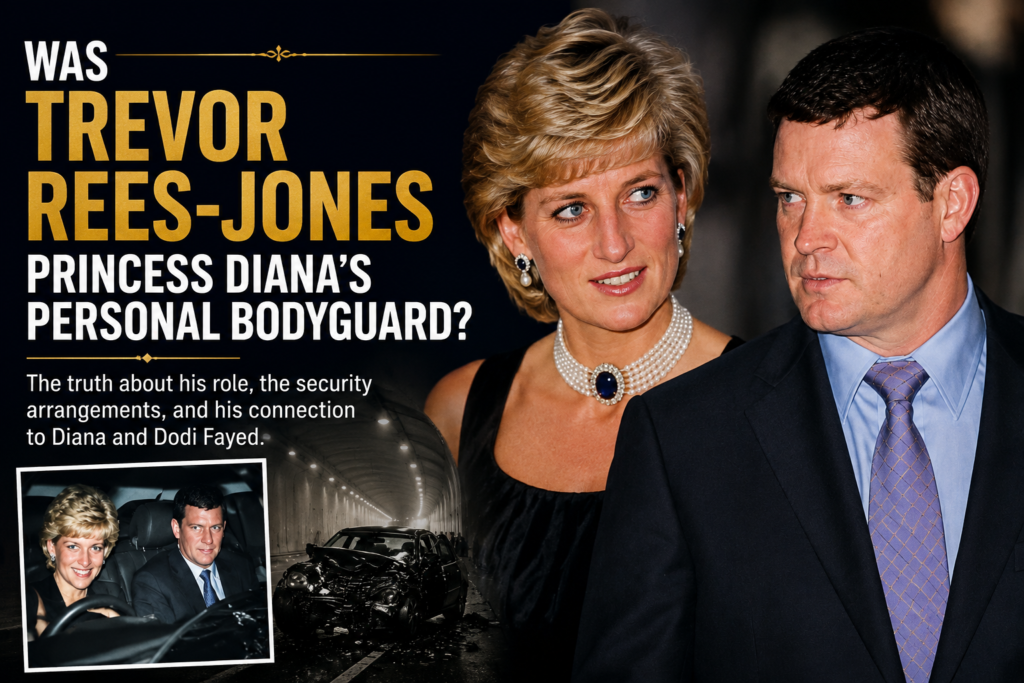
Although Rees-Jones is often described as Princess Diana’s bodyguard, he was actually employed by the Fayed family. Diana had declined official police protection after her separation from then-Prince Charles.
When Diana began her relationship with Dodi Fayed, she consequently came under the protection of Dodi’s private security team. Rees-Jones first met Diana in July 1997 while she was vacationing with Dodi and her sons aboard the Fayed family yacht, the Jonikal.
Rees-Jones later explained that his official assignment was to protect Dodi, but Diana was included in the security arrangements whenever she was with him.
Security planning was made more difficult by Dodi’s habit of keeping his movements private. Rees-Jones later said that the lack of advance information made it harder for the security team to properly prepare for the couple’s outings.
The Events Leading Up to the Paris Crash
On Aug. 30, 1997, Diana, Dodi and their security team returned to Paris after spending 10 days aboard the Jonikal in the Mediterranean.
The couple originally planned to eat at Chez Benoit, but they changed their plans after learning that paparazzi photographers were waiting outside the restaurant. They eventually chose L’Espadon at the Ritz Paris.
As Diana and Dodi prepared to leave the hotel later that night, paparazzi and onlookers gathered outside. Rees-Jones and fellow bodyguard Kez Wingfield worked on a plan designed to help the couple get away safely.
The original plan involved a two-car convoy. However, the arrangements changed, and the couple ultimately left the Ritz through the rear entrance in a single Mercedes. Rees-Jones sat in the front passenger seat while Diana and Dodi were in the back.
The attempt to escape attention from photographers did not work. Rees-Jones later recalled seeing a small hatchback and photographers on motorcycles or scooters following the Mercedes shortly after it left the hotel.
What Happened in the Pont de l’Alma Tunnel?
Around 12:17 a.m. on Aug. 31, the Mercedes was traveling from the Ritz toward Dodi’s Paris apartment when it entered the Pont de l’Alma tunnel.
Approximately 15 minutes into the journey, the car crashed into a concrete support column. The collision killed Dodi Fayed and driver Henri Paul at the scene. Diana and Rees-Jones survived the initial impact but suffered critical injuries.
Diana was taken to Pitié-Salpêtrière Hospital, where doctors attempted to save her life. She was pronounced dead at approximately 4 a.m.
Rees-Jones was left with severe injuries to his head and chest. His facial injuries were particularly serious, with the force of the crash causing extensive fractures. Surgeon Luc Chikhani later described the extent of the damage to the BBC.
Rees-Jones Underwent Extensive Facial Reconstruction
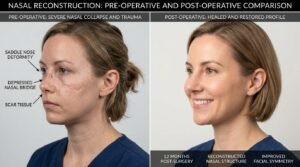
Surviving the crash came with a long and difficult medical recovery. Rees-Jones underwent an 11-hour operation to reconstruct his face.
Because his injuries were so severe, surgeons reportedly used photographs from his wedding to help determine the structure of his face. More than 30 metal screws and plates were used during the reconstruction.
He remained sedated and hospitalized for several weeks before eventually recovering enough to leave the hospital. His survival made him the sole survivor among the four people inside the Mercedes.
The Conspiracy Theories After Princess Diana’s Death
In the years following the crash, Mohamed Al-Fayed, Dodi’s father, publicly rejected the idea that the deaths were simply the result of an accident.
Al-Fayed promoted a conspiracy theory alleging that British intelligence agents had been involved in an assassination plot against Diana and Dodi. He believed the deaths were connected to concerns surrounding a possible marriage between the couple.
Rees-Jones became part of those claims because he had survived the crash and suffered memory loss afterward. Al-Fayed accused him of concealing information and alleged that he had been rewarded with a senior security position at the United Nations for remaining silent. Rees-Jones denied those accusations.
Rees-Jones later published The Bodyguard’s Story in 2000, giving his account of the events and responding to the allegations surrounding him.
An official investigation known as Operation Paget examined the conspiracy theories surrounding Diana’s death. In 2004, the inquiry found no wrongdoing by Rees-Jones and concluded that the crash was a tragic accident.
How Rees-Jones Described His Feelings After the Crash
Despite surviving, Rees-Jones continued to carry a strong sense of responsibility for the people he had been assigned to protect.
In an interview published by PEOPLE in 2000, he discussed the emotional burden of surviving when Dodi and Diana had died. He rejected the idea that his feelings were simply survivor’s guilt, instead describing a personal sense of responsibility because he had been working as Dodi’s bodyguard that night.
His comments reflected how profoundly the accident affected him, even as he attempted to rebuild his career and private life afterward.
Where Is Trevor Rees-Jones Today?
Following his recovery, Rees-Jones initially returned to work for the Fayed family. He spent approximately six months recovering before going back to his security position.
By April 1998, however, he had resigned from the job on the advice of his lawyers. According to the supplied source, tensions had developed partly because of his limited memory of the night of the crash and his refusal to support Mohamed Al-Fayed’s public theories about what happened.
Rees-Jones subsequently continued working in the security field. His reported employers have included the United Nations, Halliburton and AstraZeneca.
Away from his professional life, he has maintained a largely private existence. After divorcing his first wife, Sue, he stopped using Jones as part of his surname. He married Ann Scott, a schoolteacher, in 2003 and has reportedly continued to live in England with his wife and children.
A Life Forever Connected to a Historic Tragedy
Trevor Rees-Jones’ story remains closely tied to one of the most widely remembered tragedies involving the British royal family. He survived a crash that killed three other people, endured extraordinary physical injuries and later faced public scrutiny over his account of what happened.
Yet in the years since 1997, Rees-Jones has largely stayed away from the spotlight. His career continued in private security, while his personal life remained mostly outside public view.
Nearly 29 years after the crash, his experience offers another perspective on the aftermath of Princess Diana’s death — not only the worldwide grief that followed, but also the lasting physical, professional and personal consequences faced by the person who survived.