

The Viral Sensation: How ‘Sideneck’ Captured the Internet’s Heart
In the vast and often superficial landscape of modern social media, few digital creators possess a story as harrowing, humbling, and utterly extraordinary as the TikTok sensation known worldwide simply as ‘Sideneck’. Boasting millions of devoted followers and tens of millions of views across digital platforms, Sideneck—often recognized by his online handle @DamnSideneck—has carved out a unique space in digital culture through his disarming wit, razor-sharp self-deprecation, and defiant refusal to be pitied. His viral videos immediately stand out due to his prominent physical characteristics: his head and neck rest at a pronounced, permanent tilt to one side, and his right arm hangs motionless in a sling or by his torso. Yet, rather than shying away from his distinctive appearance or hiding behind digital beauty filters, he has made his physical condition the cornerstone of his platform, adopting the unyielding viral catchphrase: “B***H I’M SIDENECK” and bio that unapologetically proclaims: “I broke my neck so what? My arm don’t work either.”
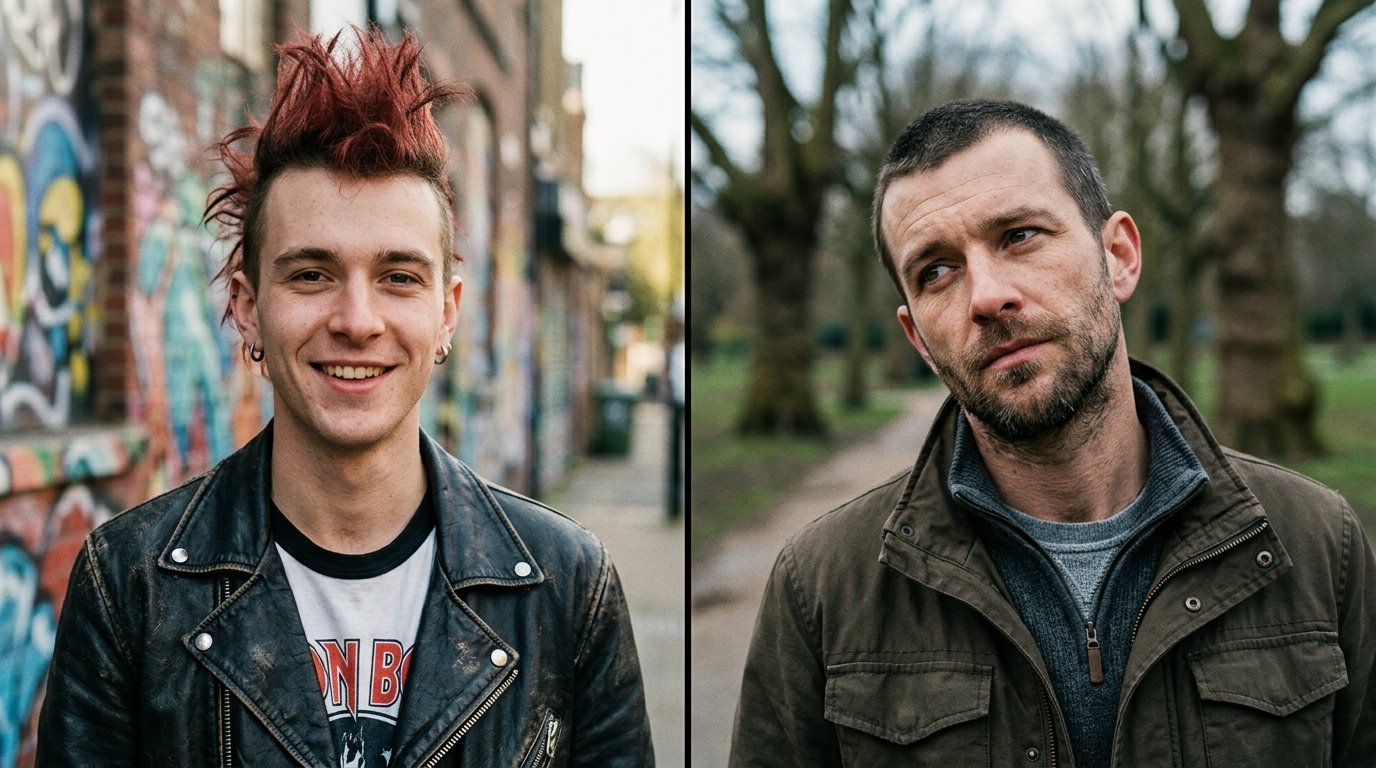
While millions of casual viewers scroll through his comedic skits, reaction videos, and candid daily vlogs laughing at his unapologetic humor, an underlying question has long captivated the internet: what horrifying events could possibly lead to such severe, permanent bodily alterations? Recently, that curiosity reached a fever pitch after the Canadian creator published a series of deeply emotional, completely unrecognizable before-and-after photographs documenting his life prior to the catastrophe that redefined his existence. The side-by-side comparison stunned followers across the globe. Looking at the vibrant, healthy young man with a rebellious punk mohawk and full physical mobility contrasted against the battle-tested survivor who exists today brought the terrifying reality of his life story into sharp focus, exposing an agonizing brush with death that few human beings could ever endure and survive.
The Midnight Collision: Striking a 1,200-Pound Moose on a Desolate Highway
To fully understand the harrowing origin of the moniker ‘Sideneck’, one must journey back to the early morning hours of April 1, 2010. It was approximately 1:30 a.m. on a pitch-black, desolate stretch of Canadian highway. The roads were quiet, enveloped in the quiet chill of late night, as the then-young man drove his small coupe—a Hyundai Tiburon—through the rural wilderness. In North American wildlife lore, few creatures evoke as much raw dread among motorists as the North American bull moose. Weighing up to 1,200 pounds and standing over seven feet tall at the shoulder, a full-grown moose carries the majority of its massive weight on long, slender legs. When a passenger vehicle collides with a moose, the bumper does not absorb the brunt of the animal’s mass; instead, it shears the legs out from underneath the beast, sending thousands of pounds of bone, muscle, and antler crashing directly through the front windshield and into the passenger cabin at highway speeds.
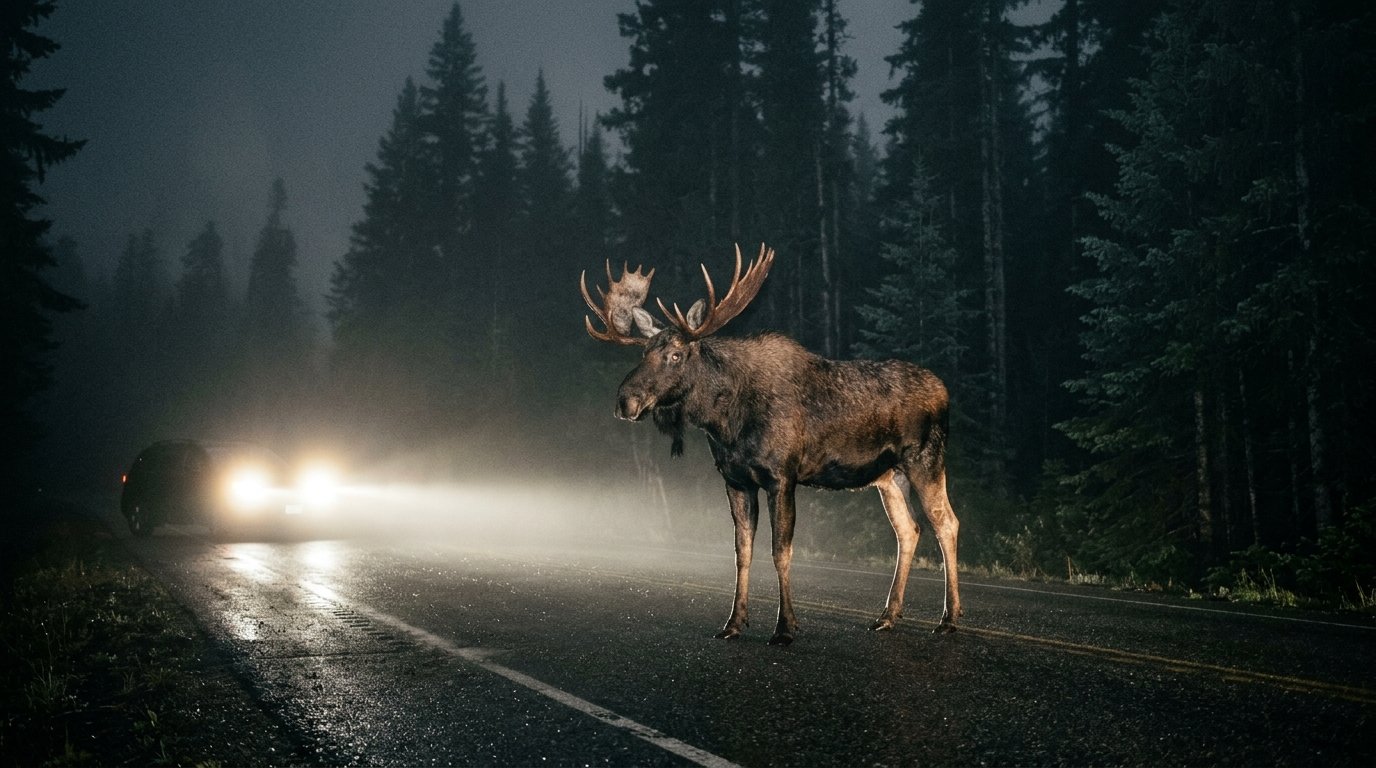
Without warning, out from the pitch-black shadows of the dense pine forest stepped a colossal, 1,200-pound bull moose directly into the path of the oncoming sports car. With zero seconds to react or maneuver onto the gravel shoulder, the impact was cataclysmic. The front end of the Hyundai crumpled violently upon striking the massive animal’s legs, instantly launching the 1,200-pound titan through the laminated glass windshield. In a terrifying, gruesome twist of biomechanics, the animal’s spine snapped upon impact with the roof pillars, causing the dying creature to flail violently in its death throes. As the moose penetrated the interior cabin, its massive hooves and heavy body violently struck the young driver across the right side of his skull, jaw, and neck with the force of an industrial wrecking ball, sealing his fate in a microsecond of sheer carnage.
From the Windshield into the Swamp: The Devastating Impact and Vehicle Wreckage
The violence of the initial collision was only the first chapter in this midnight nightmare. With the driver instantly rendered unconscious and critically crushed beneath the weight of the massive animal, the out-of-control vehicle careened uncontrollably across the highway. Traveling at high velocity without human steering, the shredded coupe veered off the asphalt shoulder, tumbling down a steep wooded embankment and plunging deep into a murky, freezing roadside swamp and ditch. The car’s roof was crushed down onto the headrests, windows were shattered into hundreds of thousands of fragments, and the twisted metal frame trapped the bleeding occupants inside as cold, stagnant water began seeping into the crumpled wreckage.
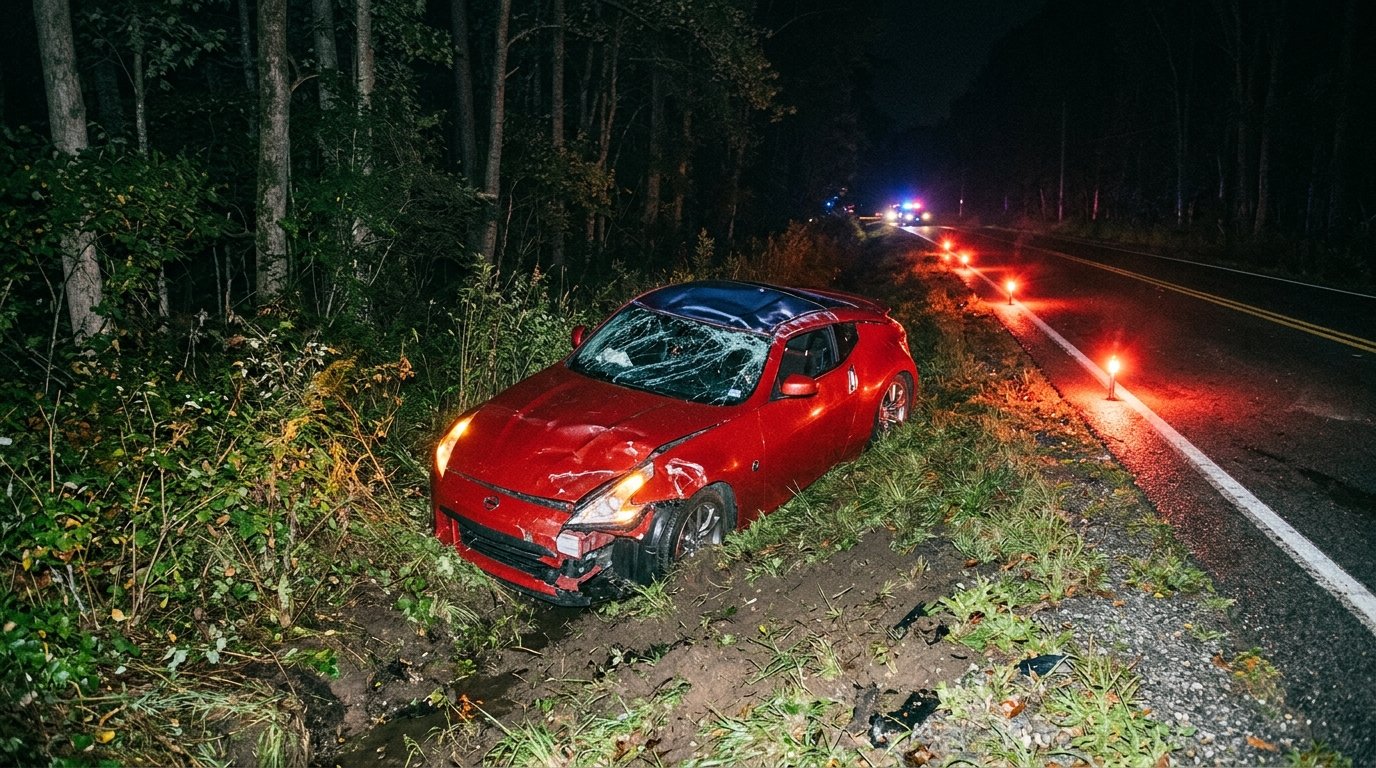
When emergency responders and passersby arrived at the scene, the sight before them appeared completely unsurvivable. The vehicle resembled a mangled cube of crushed steel and broken glass wedged among the trees and mud, with the carcass of the 1,200-pound moose still entangled in the front passenger compartment. Blood coated the deployed airbags and dashboard, while steam hissed from the ruptured engine block into the frigid night air. First responders assessing the vehicle initially feared that recovery, rather than rescue, would be their sole task. The structural destruction of the cabin was so complete that extracting anyone alive seemed like a medical impossibility, setting into motion an emergency extrication that required heavy hydraulic tools and nerves of steel under flashing red beacons.
Pronounced Dead at the Scene: The Miraculous Survival and Catastrophic Injuries
The medical reality that awaited emergency personnel inside the wreckage was nothing short of horrific. The young driver was unresponsive, pulseless, and not breathing; his airways were completely obstructed by a deluge of internal blood. In fact, he was initially pronounced dead at the scene by emergency responders who found no signs of vital life. However, fate intervened through a desperate, instinctual act of human will. A friend at the scene, refusing to accept that his companion was gone, delivered a forceful, desperate blow to his chest. That sudden impact caused the young man to violently convulse and cough up a massive blockage of aspirated blood, clearing his trachea just enough to trigger a shallow, ragged gasp of air. He had miraculously returned from the brink of absolute death.
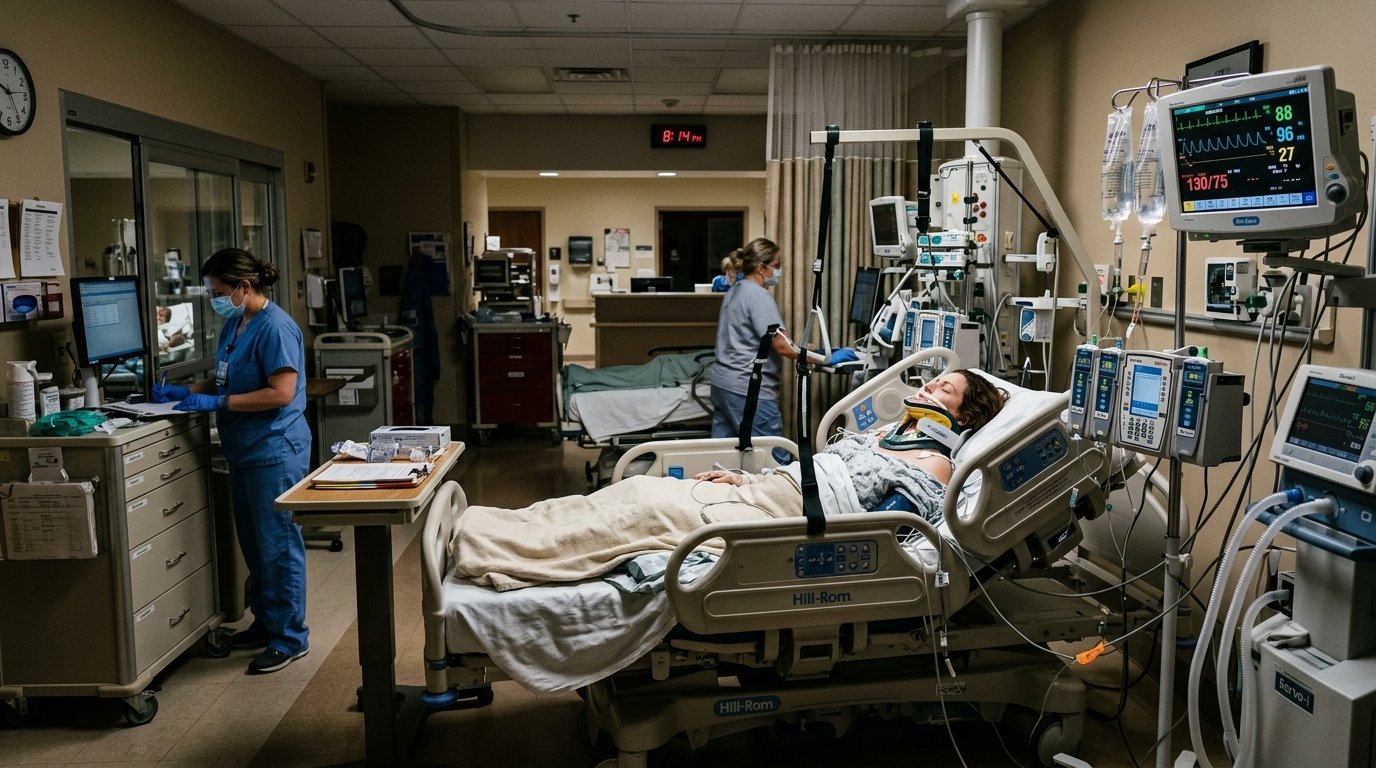
Rushed via high-speed emergency transport to a regional trauma center, trauma surgeons and neurological specialists were horrified by the full inventory of his injuries. The moose impact had broken his neck in three separate locations and broken his back in two places along the spinal column. The right side of his skull and facial bones suffered five severe compound fractures, literally crushing his facial profile. Furthermore, both of his lungs were punctured, collapsed, and rapidly filling with arterial blood, while multiple ribs were shattered like matchsticks. Most devastatingly for his future mobility, the extreme lateral hyperextension of his shoulder and neck completely severed his brachial plexus—the critical bundle of nerves connecting the spinal cord to the arm and hand. This catastrophic neurological tear resulted in the permanent, irreversible paralysis of his entire right upper limb.
Reclaiming Identity: Embracing the Moniker ‘Sideneck’ Through Unfiltered Humor
Following the emergency surgeries, the young survivor was placed into a medically induced coma for over two weeks as doctors fought frantically to stabilize his intracranial pressure and repair his lacerated internal organs. When he finally awoke weeks later, the world he had known was irrevocably gone. His body was locked into heavy cervical halos and spinal stabilization hardware, his right arm was entirely devoid of sensation or motor function, and the structural damage to his cervical vertebrae left his neck permanently fused and angled toward his right shoulder. The road to recovery took years of grueling physical therapy, multiple reconstructive surgeries, and agonizing emotional reckonings with severe chronic pain and altered physical appearance.
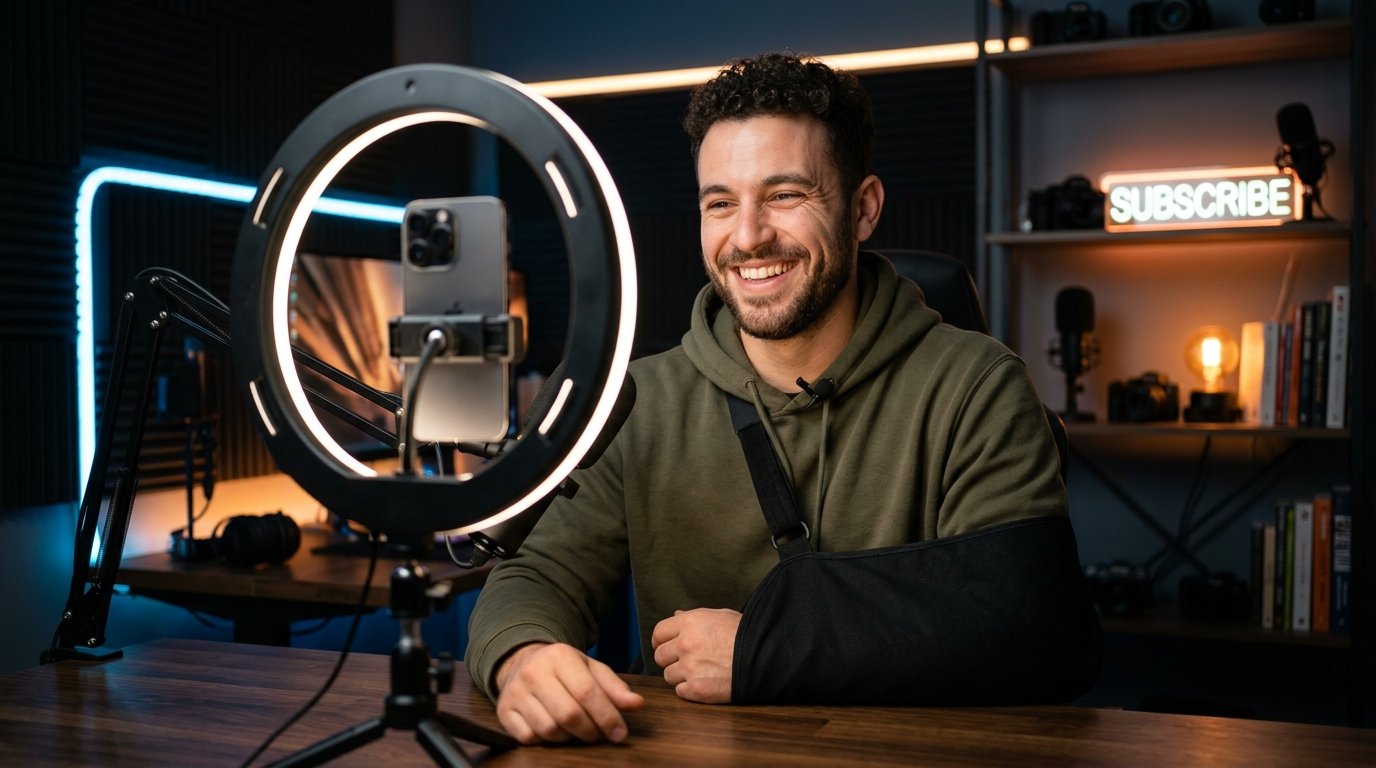
For many, such catastrophic trauma would have led to lifelong bitterness, isolation, and defeat. But Sideneck possessed an extraordinary psychological fortitude. Rather than letting his physical disability define him as a victim, he decided to take absolute ownership of his reality through relentless, fearless comedy. When he launched his presence on TikTok, he anticipated cruel mockery from online trolls regarding his tilted neck and limp arm. In a brilliant preemptive strike, he christened himself ‘Sideneck’, beat every detractor to the punchline, and normalized his disability by making it the hero of his narrative. By poking fun at his own struggles—demonstrating how he cooks with one hand, drives with adaptive techniques, and responds to bewildered stares in public—he disarmed prejudice and built a fiercely loyal global community of admirers who view him not as broken, but as utterly invincible.
The Unrecognizable Before-and-After Photos: A Powerful Tribute to Resilience and Survival
The recent unveiling of Sideneck’s before-and-after photographs sent shockwaves across social media, offering millions of fans their first comprehensive look into the life he lived before the 2010 crash. In the vintage photographs taken during his late teens, followers were introduced to an unrecognizable young man: upright, robust, sporting an edgy dyed mohawk, leather jackets, and exuding the carefree confidence of youth with two fully functioning arms and an athletic posture. The visual contrast between those sunlit, carefree memories and his current physical form serves as a profound, sobering reminder of how rapidly and permanently a single second on an empty highway can alter the entire trajectory of a human life.

Comment sections beneath the before-and-after reveals were flooded with thousands of emotional testimonials from followers, trauma survivors, and medical professionals. Fans expressed profound admiration not just for the stark physical reality of his survival, but for the immense emotional maturity required to share such vulnerable artifacts of his past. For Sideneck, revisiting those old images is not an exercise in mourning a lost identity, but rather a badge of honor celebrating human endurance. He openly tells his audience that while the young man with the mohawk was healthy and carefree, the man standing before the camera today possesses an unshakeable perspective on gratitude, purpose, and the fragility of human existence that could only be forged in the crucible of near-fatal trauma.
Redefining Disability and Viral Culture: The Lasting Legacy of Sideneck
In an era dominated by hyper-curated, cosmetically enhanced aesthetics on digital platforms like TikTok and Instagram, Sideneck’s widespread popularity represents a vital cultural counterweight. He shatters the stigma often associated with severe physical disfigurement, visible disabilities, and chronic spinal trauma. By refusing to adopt a solemn, pity-seeking persona, he provides people living with disabilities—particularly young people navigating limb paralysis, cervical injuries, or facial differences—a vibrant, charismatic role model who proves that humor, romantic confidence, and vibrant social success are fully attainable regardless of physical limitations.
Ultimately, the horrifying story behind how ‘Sideneck’ earned his nickname is far more than a gruesome tale of an encounter with a 1,200-pound moose; it is an enduring testament to the triumph of the human spirit over incomprehensible catastrophe. Every time he looks into his smartphone camera, tilts his head with trademark bravado, and shouts his legendary catchphrase, he sends a defiant message to the universe. He survived being pronounced dead in a freezing swamp, conquered weeks in a coma, and turned life-altering tragedy into an inspirational global brand. For millions around the world, Sideneck is not just a viral comedian—he is living proof that while we cannot always control the storms that strike our lives, we possess absolute power over who we choose to become in the aftermath.
Frequently Asked Questions About Sideneck and His Survival Story
Why is the TikTok content creator nicknamed ‘Sideneck’?
The TikTok creator earned the nickname ‘Sideneck’ because his neck is permanently angled and tilted to the right side as a result of catastrophic spinal and cervical injuries sustained in a near-fatal 2010 car accident. Rather than letting critics or trolls mock his appearance, he proactively adopted the moniker ‘Sideneck’ (often stylized as @DamnSideneck), transforming a visible physical disability into a viral symbol of humor, strength, and empowerment across social media platforms.
What animal caused the horrifying car crash that injured Sideneck?
The horrifying collision was caused by a massive 1,200-pound bull moose that stepped directly in front of his small vehicle on a dark Canadian highway at approximately 1:30 a.m. on April 1, 2010. Due to the animal’s towering height and immense mass, the impact threw the entire moose through the car’s front windshield, where the creature’s snapping spine and thrashing hooves directly crushed the right side of the driver’s head, neck, and upper torso.
What specific injuries did Sideneck suffer during the collision?
Sideneck suffered an astonishing array of life-threatening injuries during the collision, including a broken neck in three places, a broken back in two places, five compound facial fractures on the right side of his face, multiple broken ribs, and two punctured and collapsed lungs filled with aspirated blood. In addition, his brachial plexus nerve cluster was severed, leaving his right arm permanently and completely paralyzed.
Was Sideneck really pronounced dead at the scene of the accident?
Yes. When first responders arrived at the mangled wreckage submerged in the roadside swamp, Sideneck was pulseless, unresponsive, and had stopped breathing due to blood choking his trachea, leading emergency personnel to initially pronounce him dead. He was revived only after a friend on the scene struck his chest with enough force to dislodge the blood blockage, allowing him to take a ragged breath until he could be stabilized by paramedics and airlifted to an intensive care trauma unit.
What message do Sideneck’s before-and-after photos send to his millions of followers?
Sideneck’s unrecognizable before-and-after photos serve as a powerful testament to survival, resilience, and body positivity. By contrasting his pre-accident appearance—where he was an athletic teenager sporting an edgy punk mohawk—with his current reality as a survivor living with a permanent neck tilt and paralyzed arm, he demonstrates that physical trauma does not define human worth. His message urges followers to embrace their scars, laugh in the face of adversity, and practice gratitude for every breath of life.